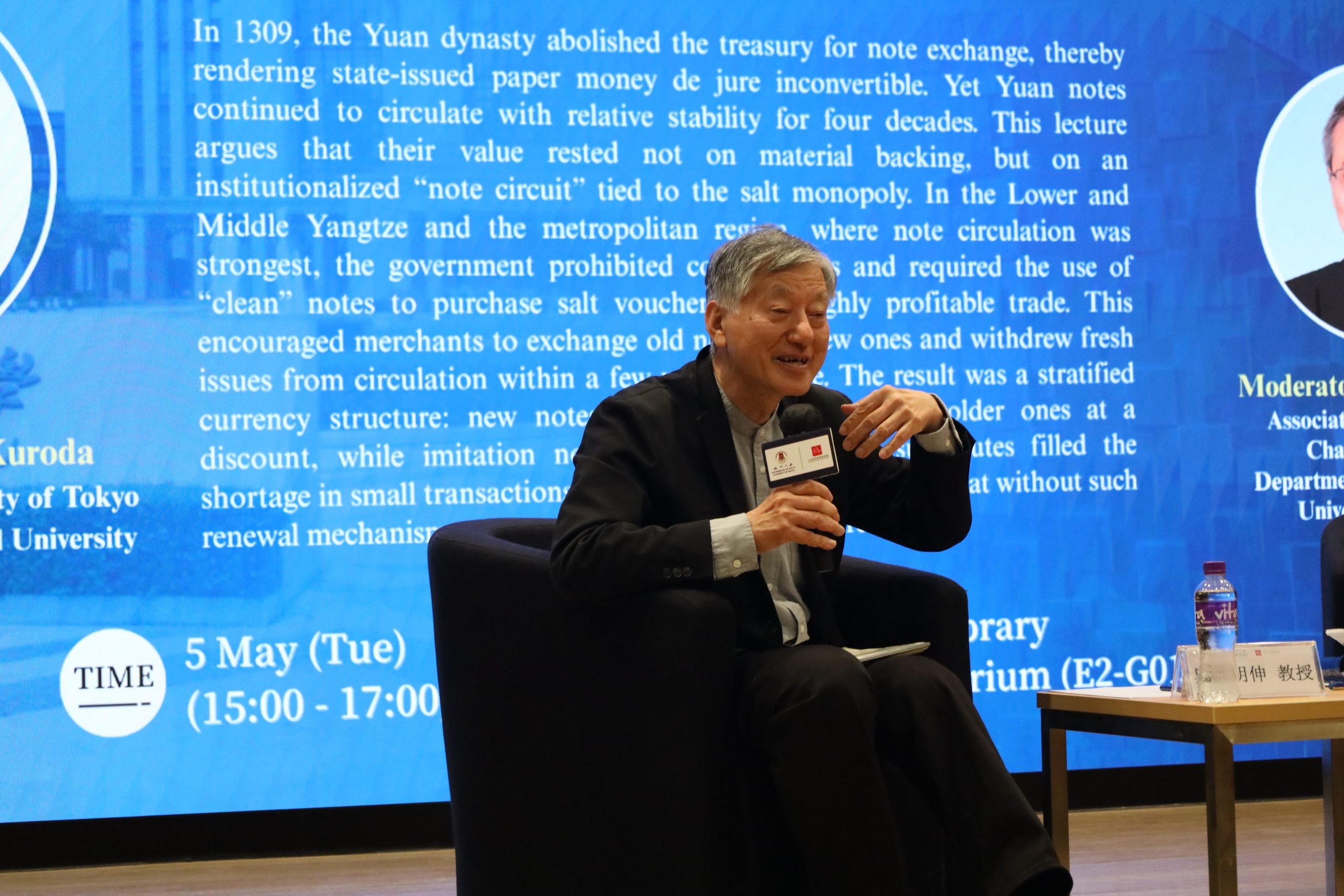
On May 5, 2026, the Institute of Advanced Studies in Humanities and Social Sciences (IAS) of the University of Macau held a distinguished guest lecture by Professor Kuroda Akinobu
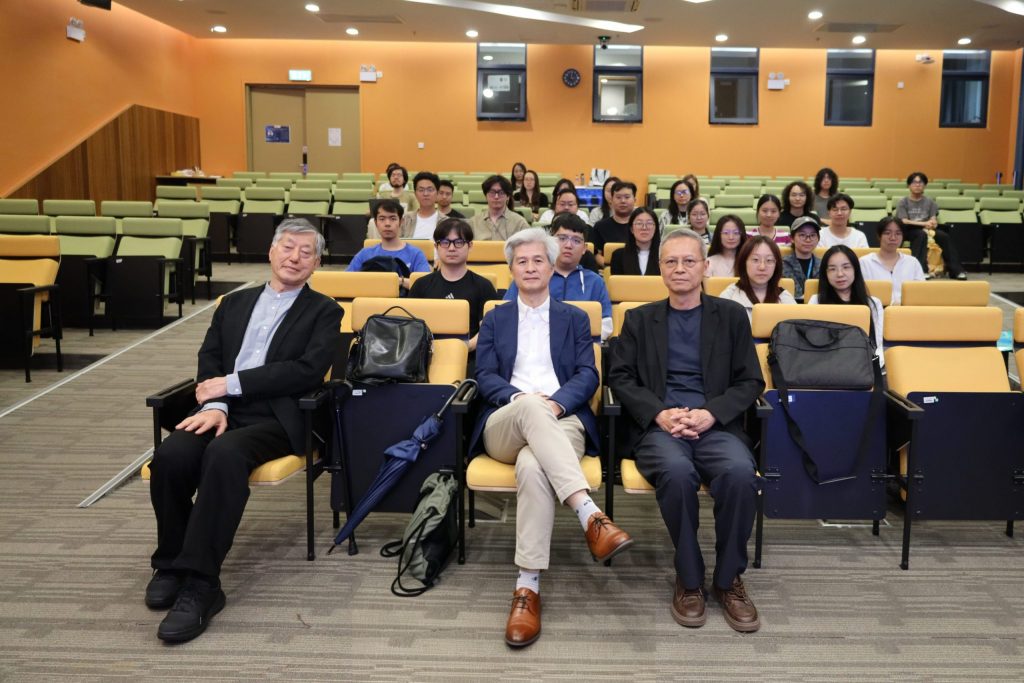
”On May 5, 2026, the Institute of Advanced Studies in Humanities and Social Sciences (IA
Video Recap
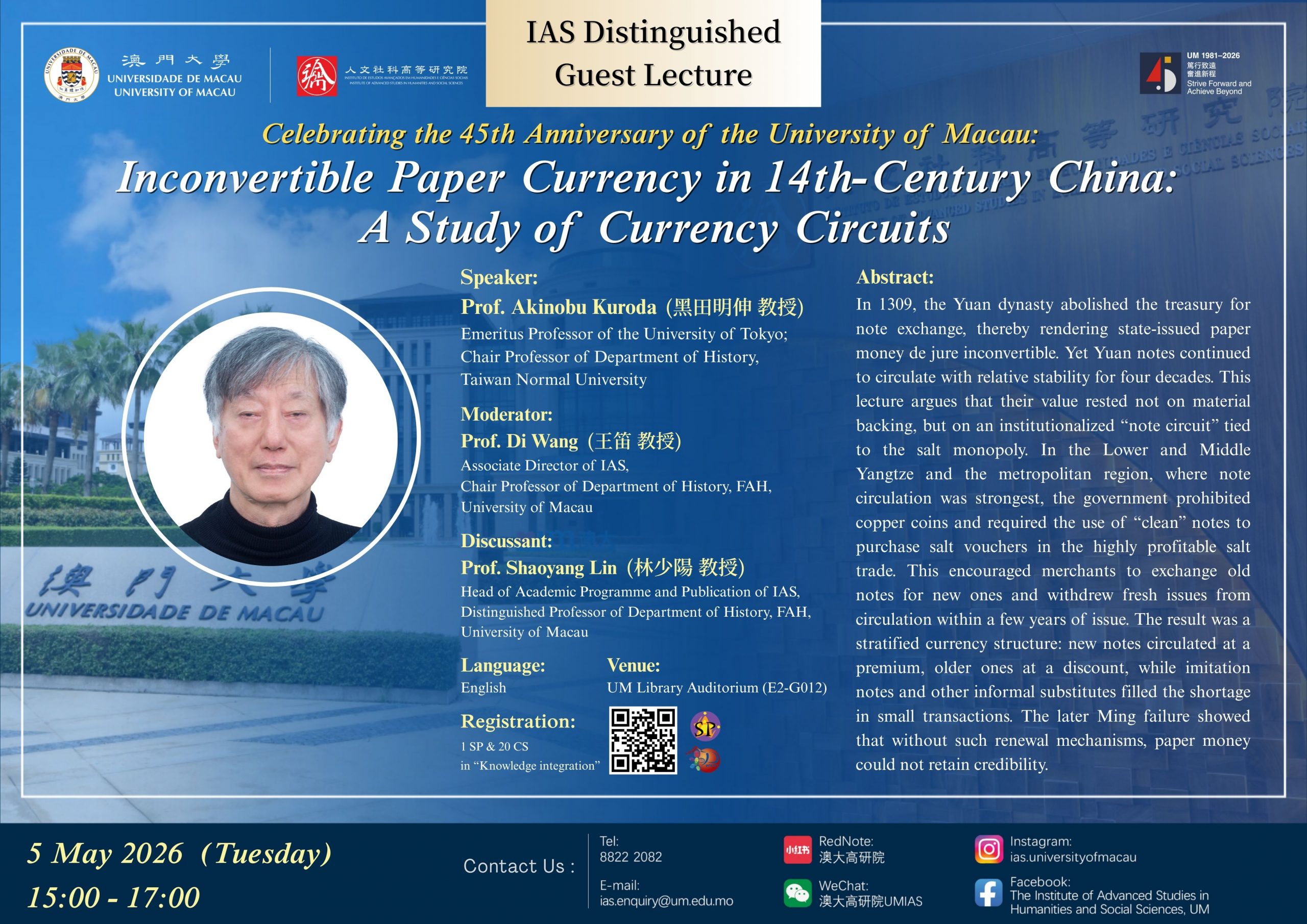
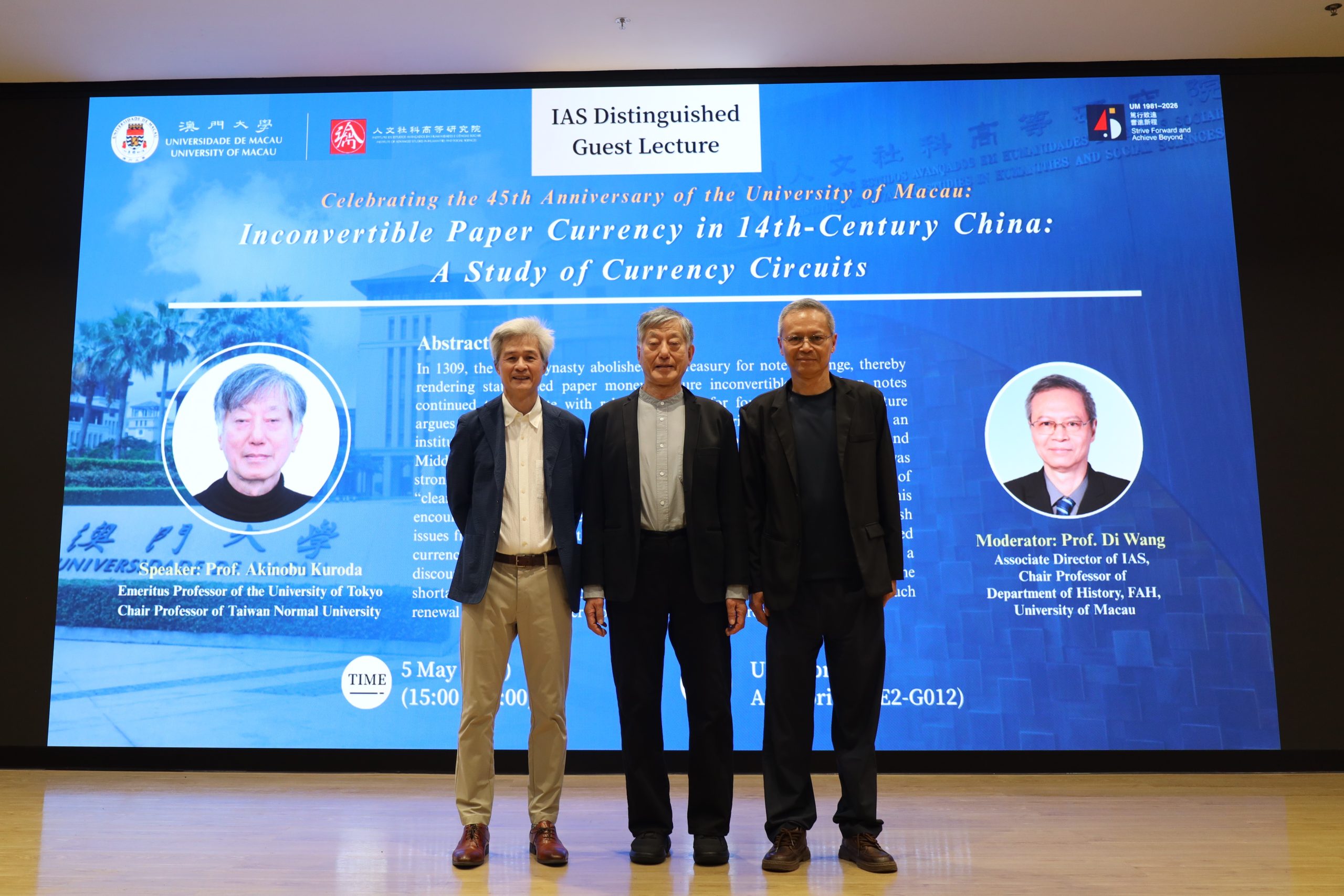
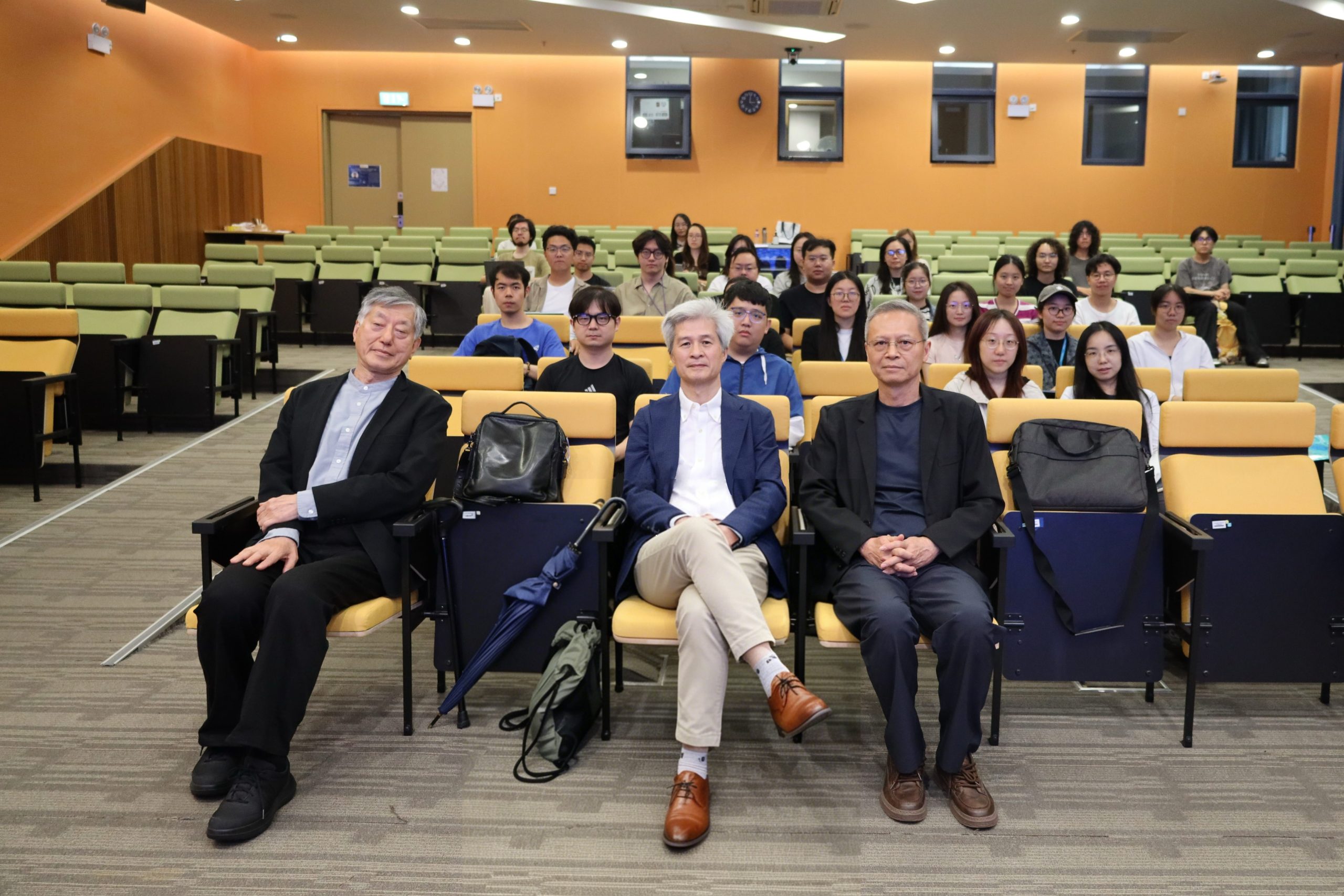
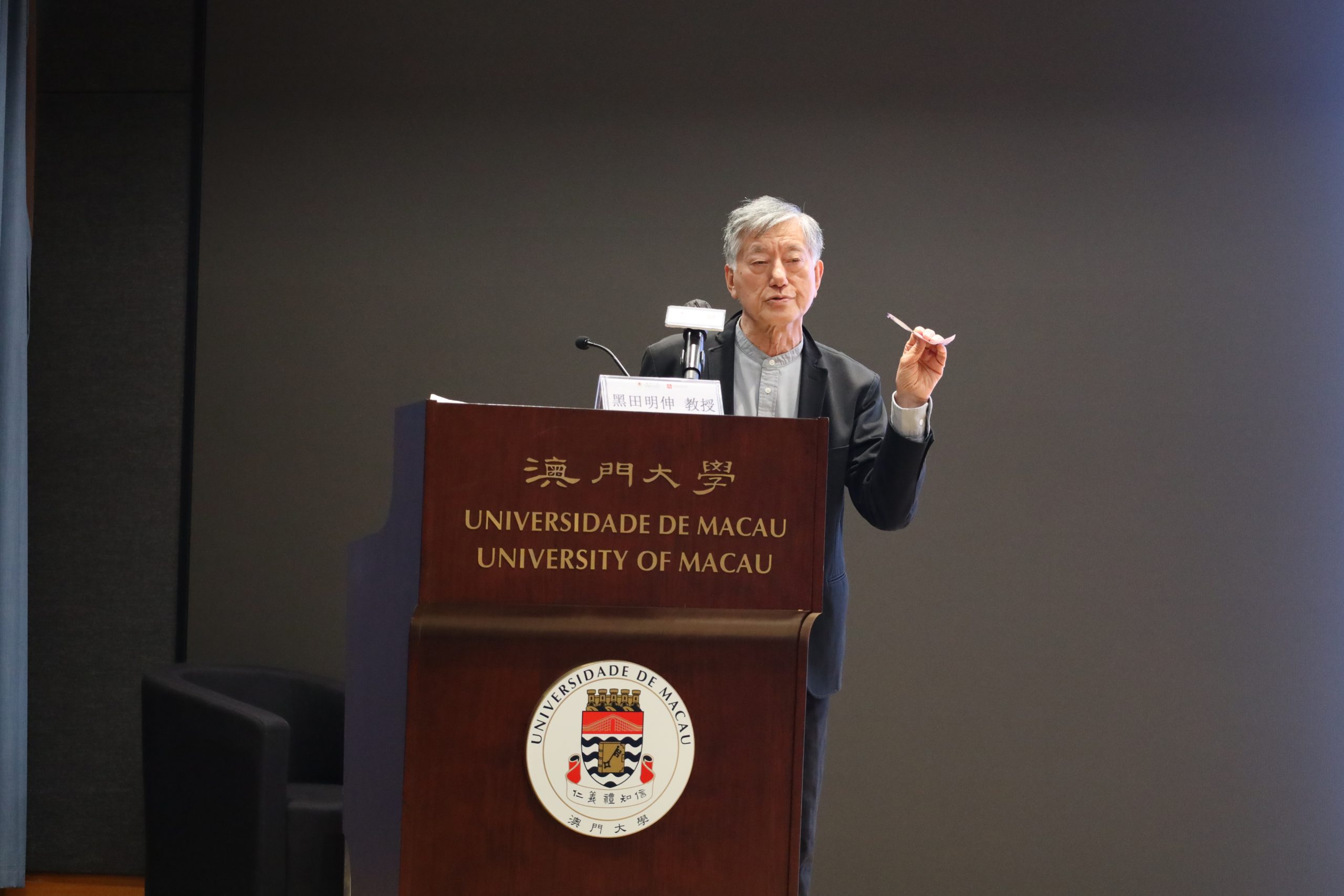
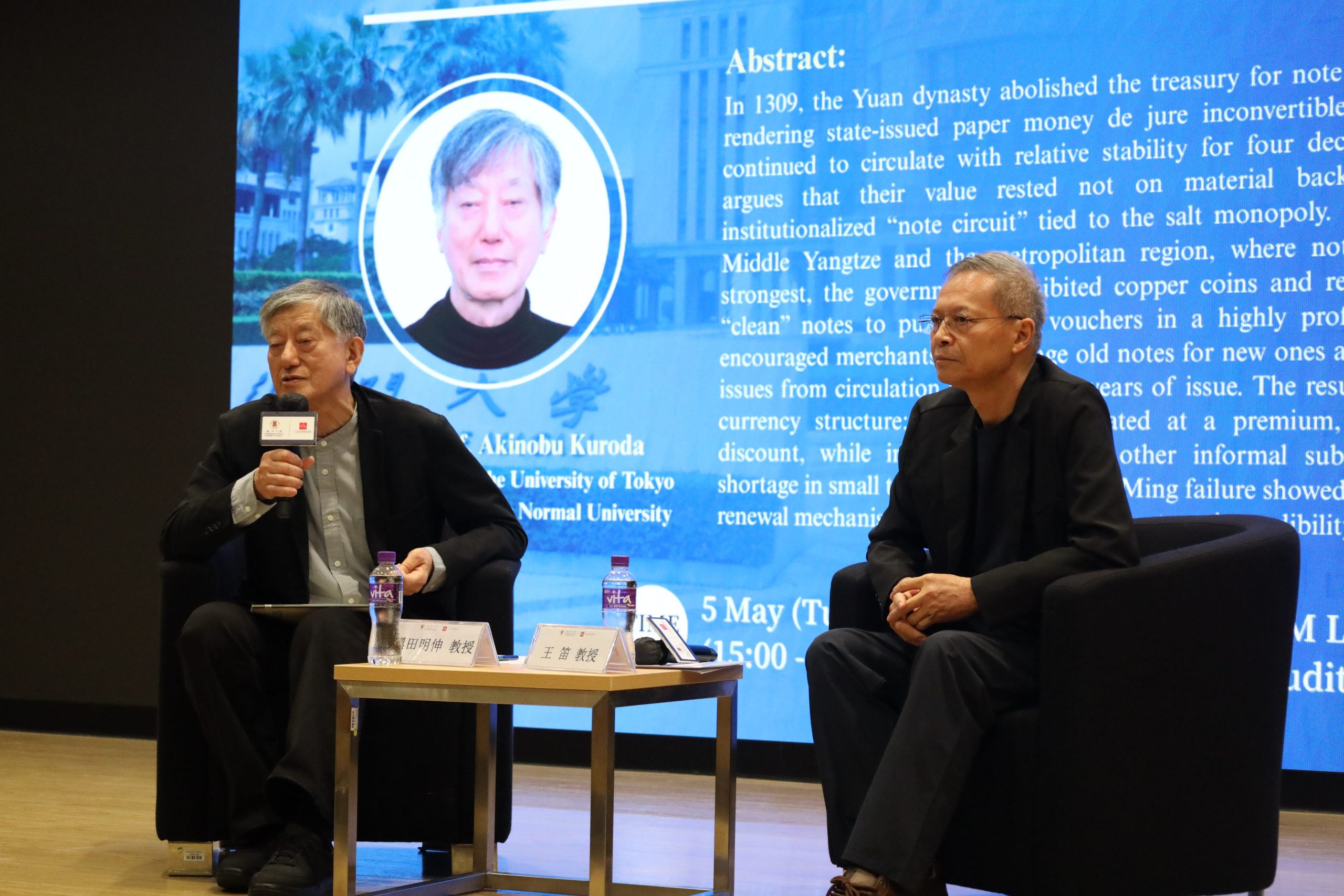
On May 5, 2026, the Institute of Advanced Studies in Humanities and Social Sciences (IAS) of the University of Macau held a distinguished guest lecture by Professor Kuroda Akinobu, Emeritus Professor of the University of Tokyo and Chair Professor of the Department of History at Taiwan Normal University, entitled “Inconvertible Paper Currency in 14th-Century China: A Study of Currency Circuits.” The lecture was moderated by Professor Wang Di, Associate Director of IAS and Chair Professor of the Department of History in the Faculty of Arts and Humanities (FAH). The event attracted faculty and students from diverse disciplinary backgrounds including history, economics and social sciences, featuring a lively atmosphere of academic exchange.
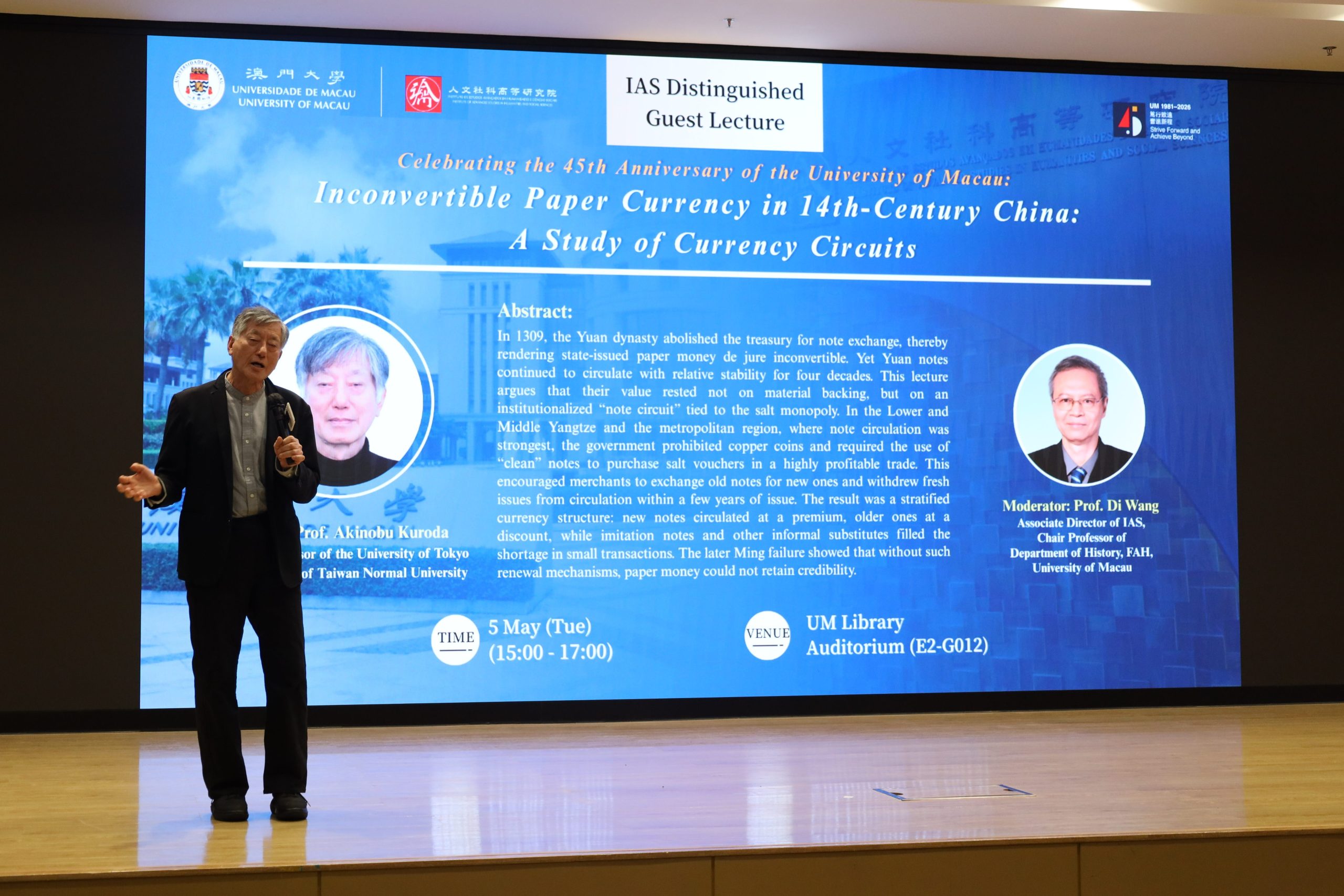
Professor Kuroda opened with the Yuan dynasty’s abolition of the treasury for note exchange in 1309, which transformed state-issued paper money into a de jure inconvertible currency. Although earlier Chinese state notes had been formally convertible, they often functioned as de facto inconvertible money. Following this reform, Yuan notes circulated for over four decades with relative stability and without significant inflation. Focusing on the central question of how a currency lacking material backing could sustain its value, Professor Kuroda highlighted the institutional foundations of its circulation.
He explained that the Yuan State’s fiscal revenue relied heavily on the salt monopoly, particularly in the Lower and Middle Yangtze regions. The prohibition of copper coin in these areas, combined with the requirement that salt vouchers be purchased exclusively with “clean” (newly issued or high-quality) notes, generated continuous demand for new issues. In effect, this arrangement constituted an institutionalized “note circuit”, through which newly issued notes were drawn out of circulation within a few years. A stratified currency structure emerged: new notes circulated at a premium, while older issues were discounted. As demand for usable currency outstripped official supply, imitation notes and other informal substitutes filled the gap in small-scale transactions, allowing the official inconvertible regime to function by concentrating on higher-value exchanges.
In comparing the Yuan and Ming dynasties, Professor Kuroda noted that the Ming government failed to establish mechanisms for renewing old notes and instead sold salt vouchers primarily in exchange for grain. The resulting absence of a structured “note circuit” undermined the sustainability of paper currency. The contrasting experiences of the two dynasties suggest that, in pre-banking economies, the credibility of paper money depended not merely on legal status or declarations of trust, but on institutionalized circuits that sustained demand, structured circulation, and ensured periodic renewal.
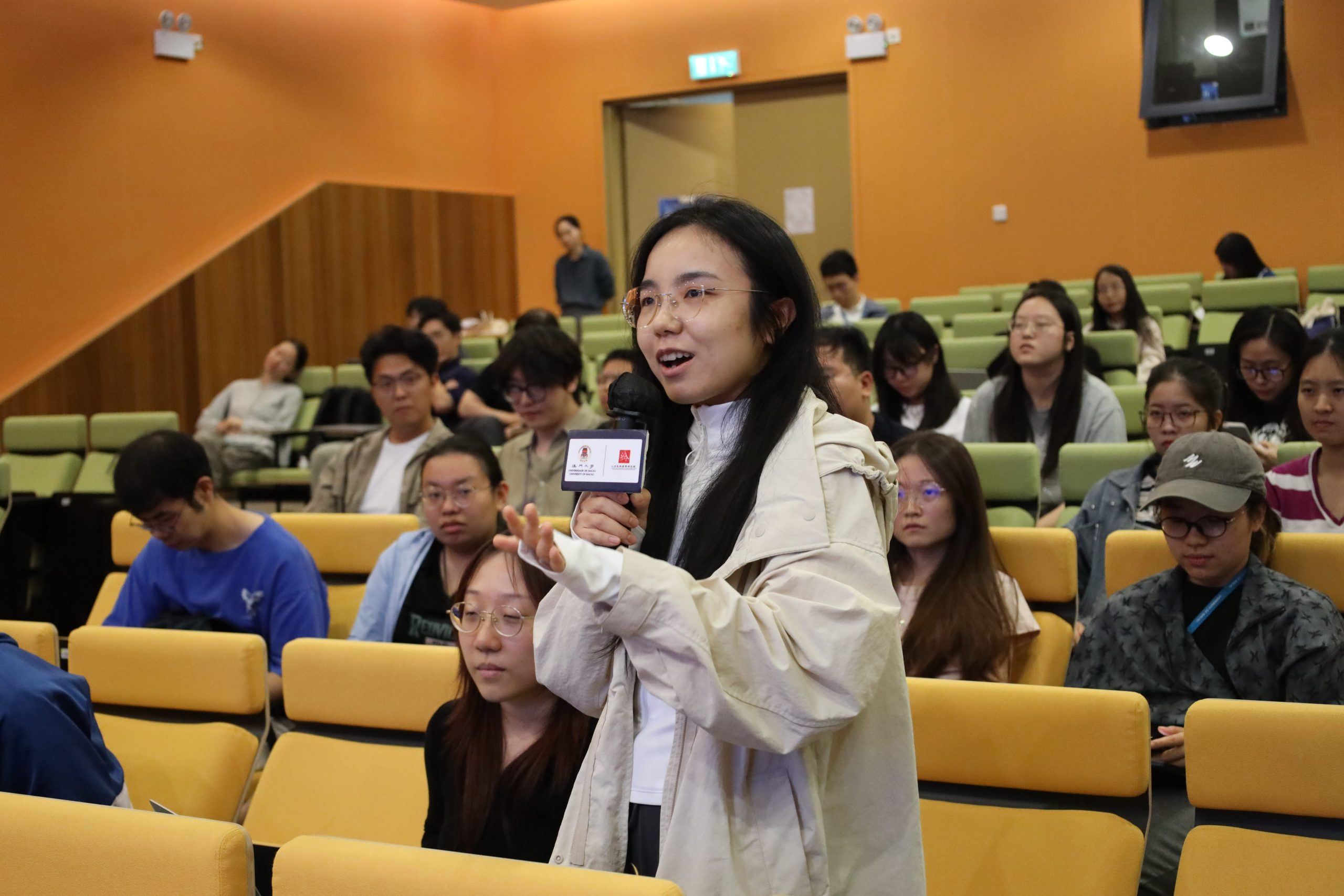
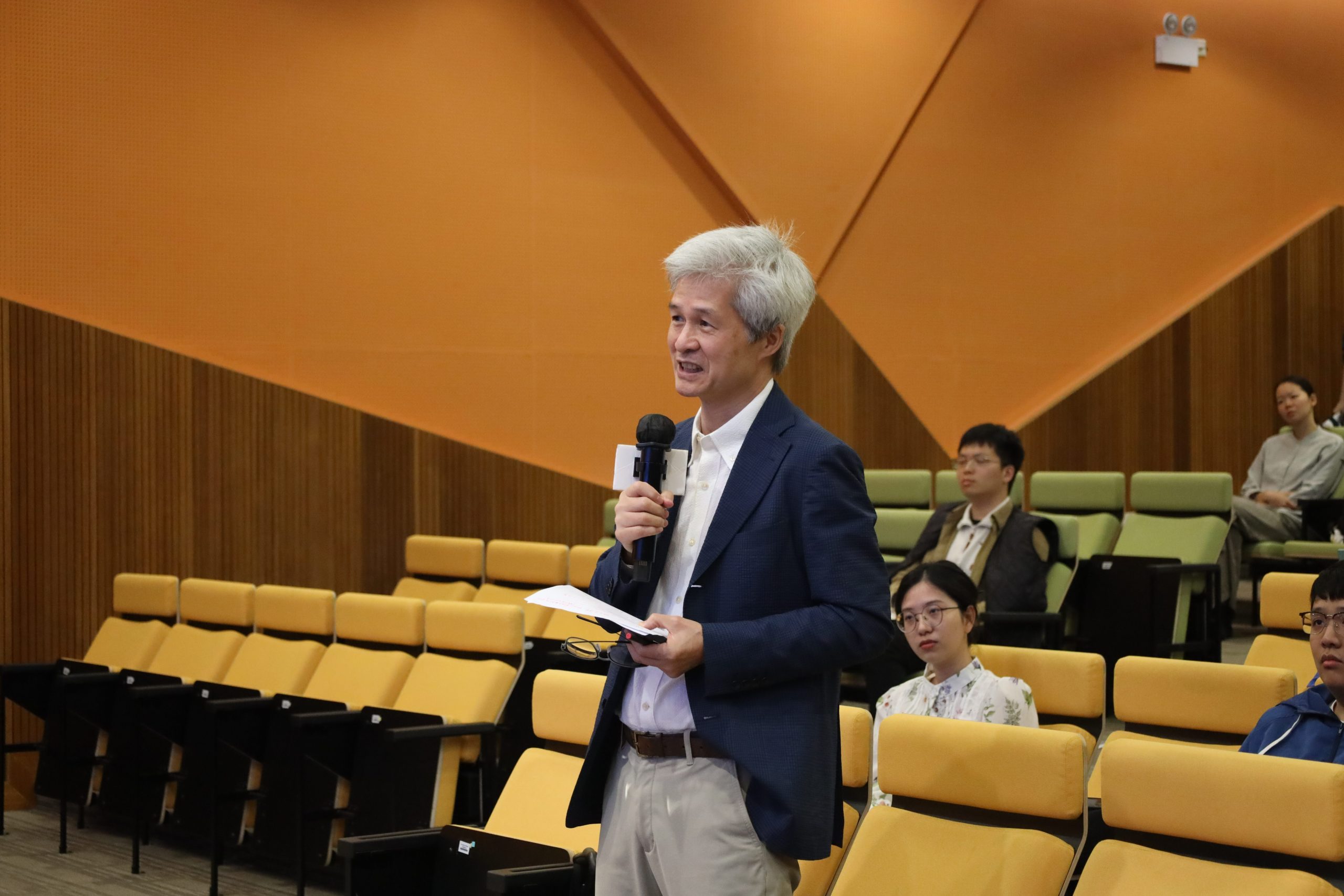
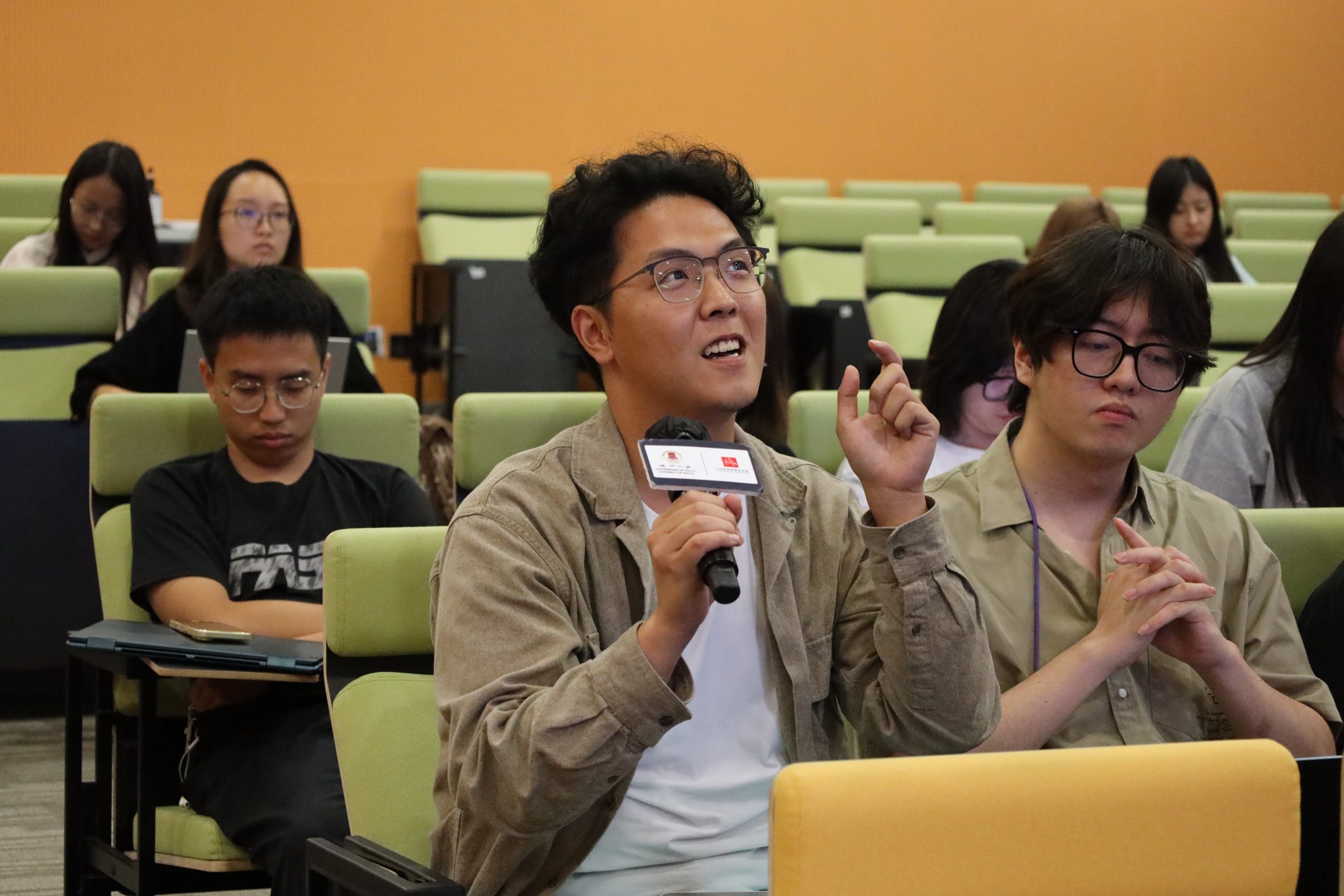
During the Q&A session, Professor Lin Shaoyang, Head of Academic Programme and Publication of IAS and Distinguished Professor of the Department of History in FAH, commented on the lecture and raised reflective questions concerning the evolution of salt administration and monetary policies across the Song, Yuan and Ming dynasties, regional disparities in Yuan paper money circulation, the commercial function of counterfeit currency, and the monetary attributes of salt certificates. Many participating faculty and students actively posed questions, to which Professor Kuroda responded comprehensively and further elaborated the historical significance of China’s paper currency system in the 14th century. The on-site exchange was profound and intellectually inspiring.
The lecture deepened understanding of the operational logic of premodern Chinese paper money and offered a historically grounded perspective on the structural foundations of paper currency more generally.