
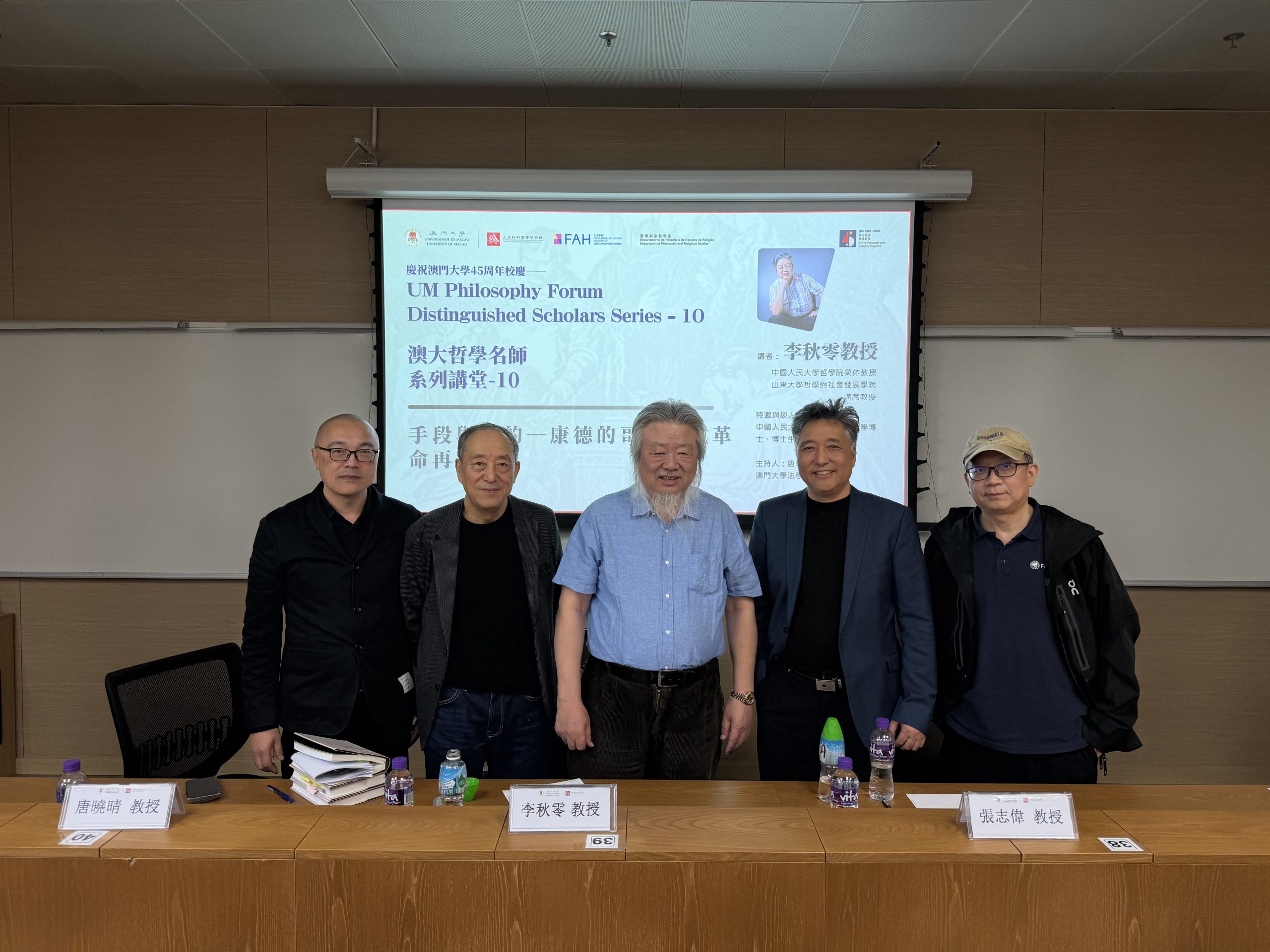
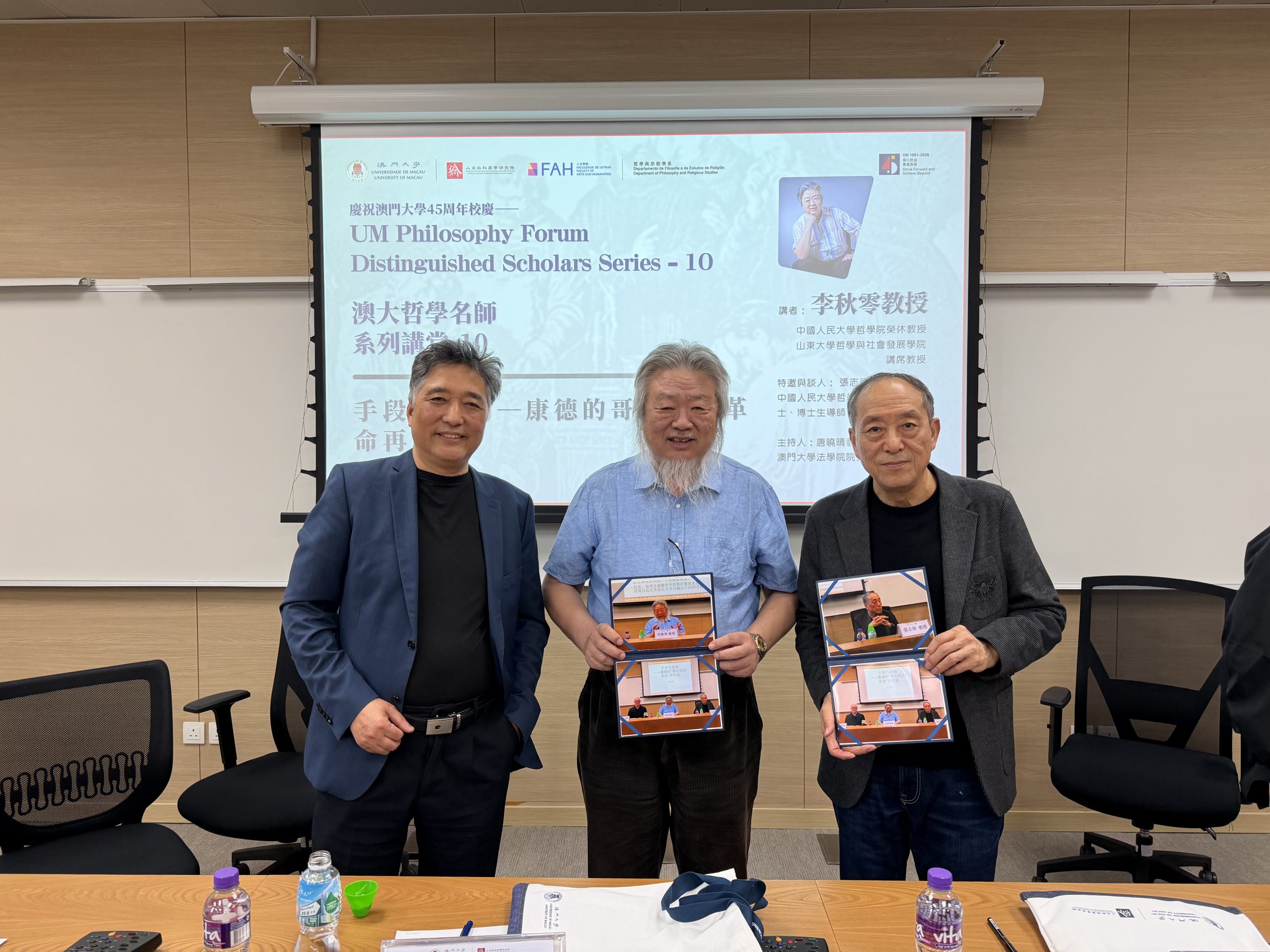
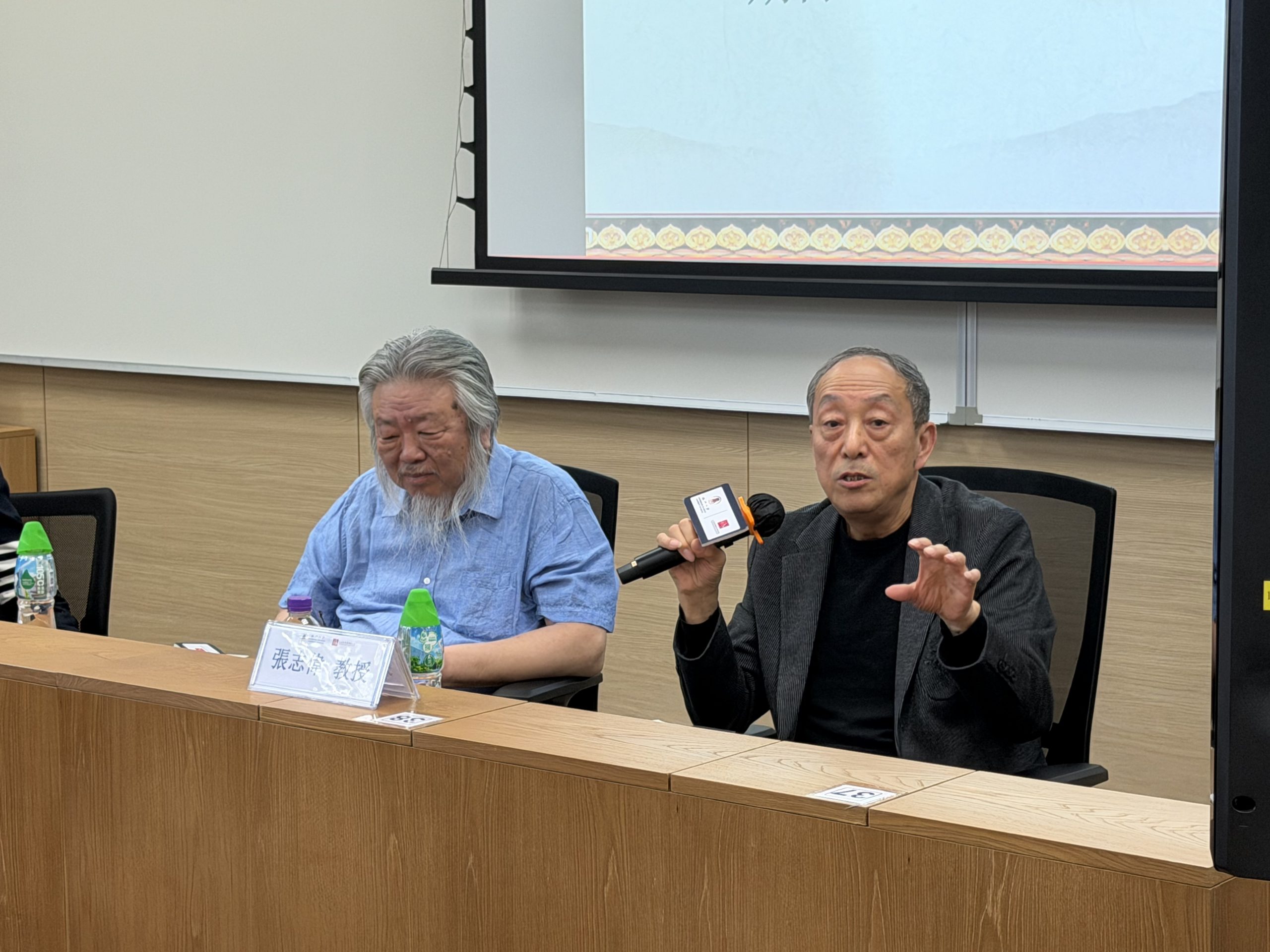
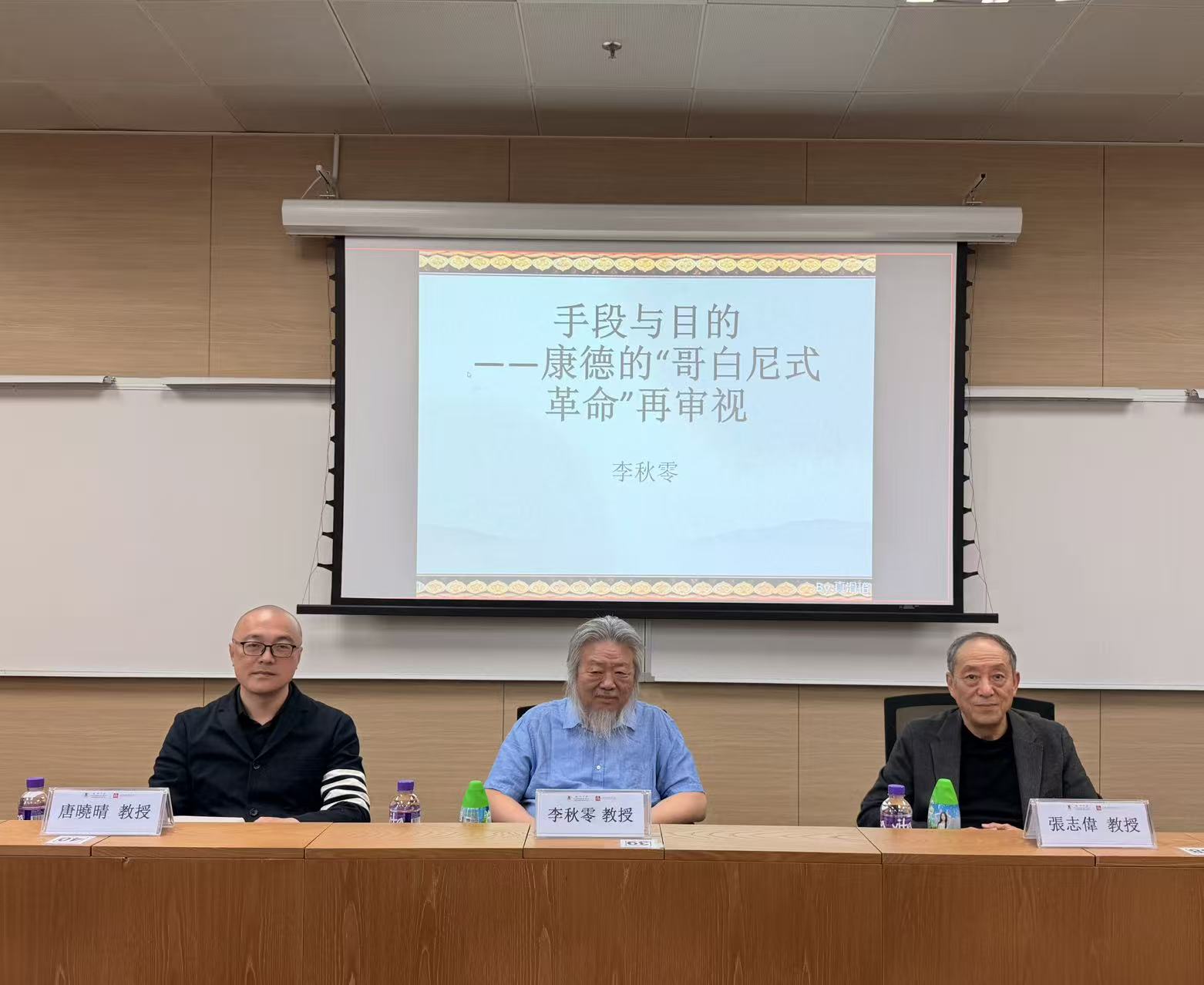
UM Philosophy Forum Distinguished Scholars Series – 10, jointly organized by the Institute of Advanced Studies in Humanities and Social Sciences (IAS) and the Department of Philosophy and Religious Studies of the Faculty of Arts and Humanities (FAH) at the University of Macau, was successfully held on the afternoon of 13 March 2026 at the Humanities and Social Sciences Building (E21A-G049). The lecture featured Professor Qiuling Li, Emeritus Professor of the School of Philosophy at Renmin University of China and Chair Professor of the School of Philosophy and Social Development at Shandong University, as the guest speaker. The session was moderated by Professor Io Cheng Tong, Dean and Professor of the Faculty of Law at the University of Macau, with Professor Zhiwei Zhang, Professor, PhD Supervisor of the School of Philosophy at Renmin University of China, serving as the discussant.
At the beginning of the lecture, Professor Li elaborated on the theme *Means and Ends: A Re-examination of Kant’s Copernican Revolution*. He pointed out that Kant’s Copernican Revolution represents a new height in the development of modern Western philosophy of subjectivity, yet it was not the ultimate goal of his philosophy; the original intention of this revolution was merely to guide metaphysics, which had long been groping in the dark, onto a reliable path. Professor Li examined the key reasons why logic, mathematics and physics had successively embarked on a reliable scientific path, and made a contrast with the developmental predicament of metaphysics, which had fallen into dogmatism and endless disputes due to its principles transcending the boundaries of experience.
Professor Li then detailed the implementation path of Kant’s Copernican Revolution: Following the example of the transformative modes of thinking in mathematics and natural science, Kant put forward the core assumption that “objects must conform to our cognition”. Through a critique of human cognitive faculties, he abstracted a priori cognitive forms such as time, space and categories, demonstrated their role in endowing knowledge with universal necessity, and ultimately proposed the thesis that “the understanding legislates for nature”. Professor Li noted that Kant did not initiate this scientific revolution, but only revealed its underlying principles and essence.
In his discussion of the outcomes of the revolution, Professor Li emphasized that Kant strictly confined a priori cognitive forms within the scope of “possible experience” and criticized the transcendent application of reason in traditional metaphysics. As such, the revolution failed to extricate metaphysics from its predicament and achieve its preset goals. Having restricted speculative reason and separated nature from freedom, Kant introduced the principle of purposiveness through reflective judgment and established his own moral metaphysics. Though this metaphysics is a “critiqued dogmatism” with only a regulative function, it still failed to alter the overall developmental landscape of metaphysics. Western philosophy after Kant continued to constantly reconstruct its systems on the “battlefield” of metaphysics.
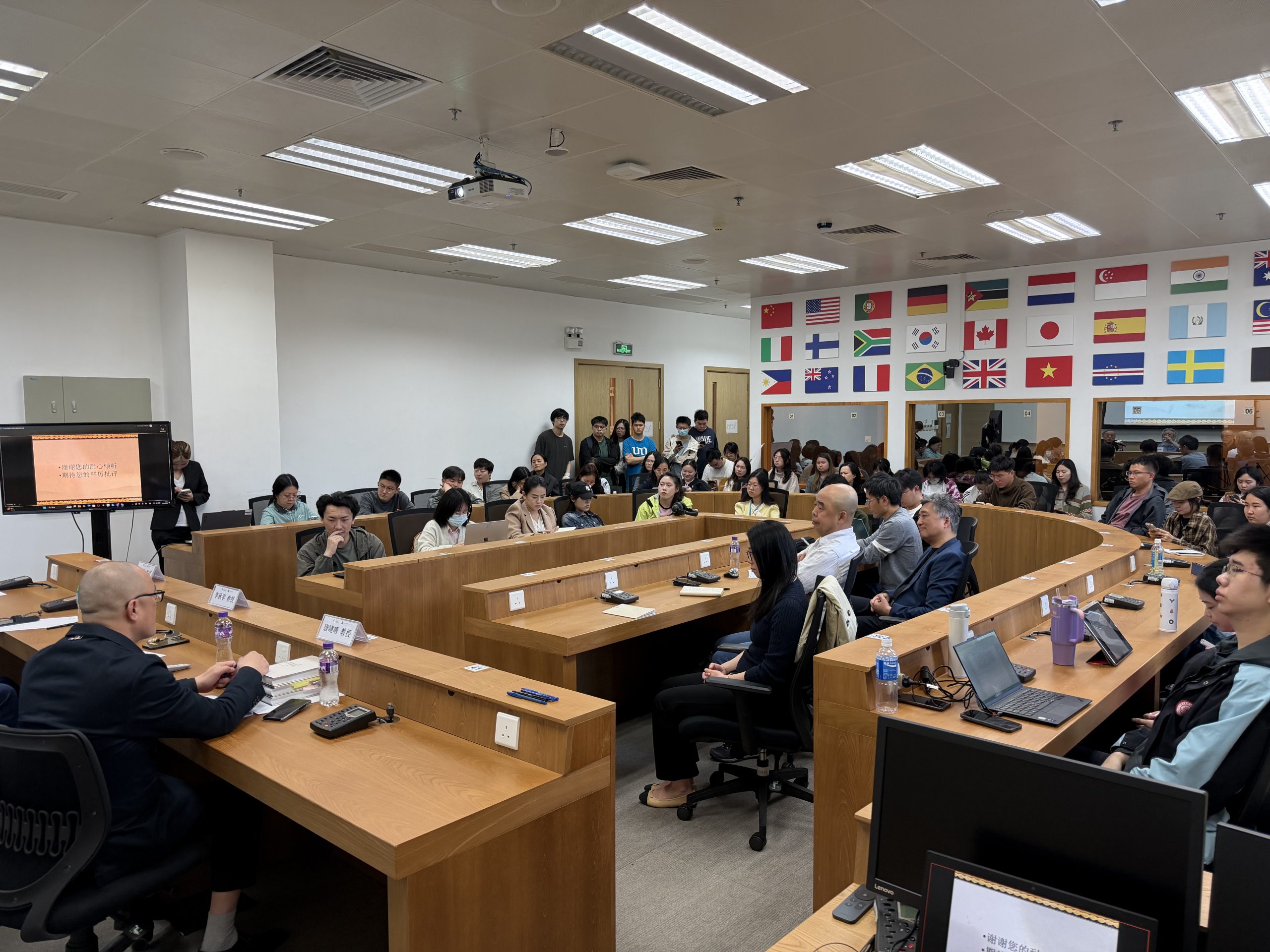
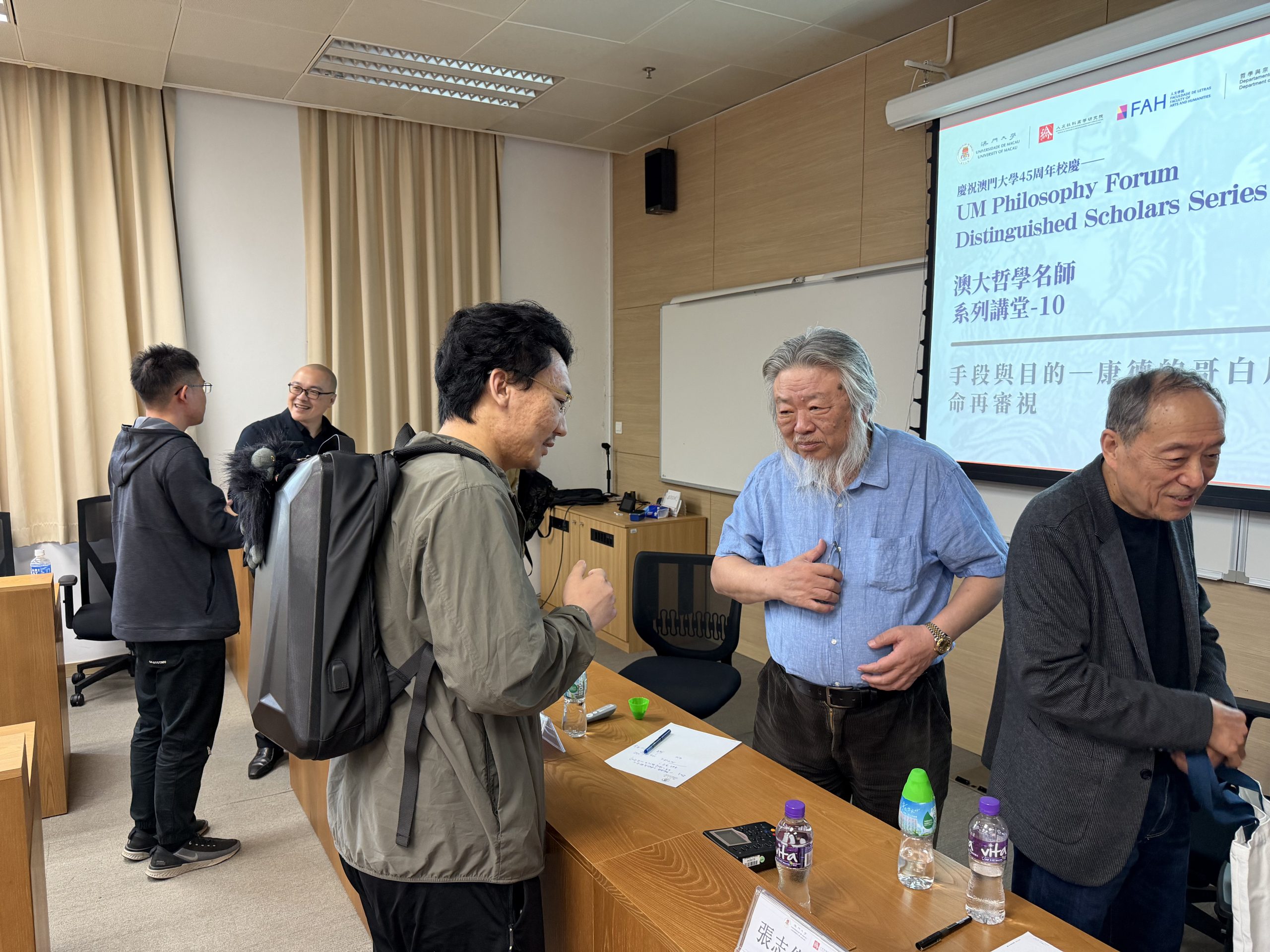
During the discussion session, Professor Li engaged in a lively and in-depth exchange with the faculty and students present. The discussions covered a wide range of topics, including the connotation of Kant’s Copernican Revolution, the developmental predicaments of metaphysics, and the connection between Kant’s practical and theoretical philosophy.
The event attracted a large number of scholars and students, with a lively on-site atmosphere. It not only enabled the audience to gain a deeper and more comprehensive understanding of Kant’s Copernican Revolution and his metaphysical thoughts, but also provided new perspectives for the research of relevant philosophical issues. IAS will continue to host high-quality academic events to promote intellectual exchange and broaden horizons in humanities and philosophical research.

UM Philosophy Forum Distinguished Scholars Series – 10
Video Recap