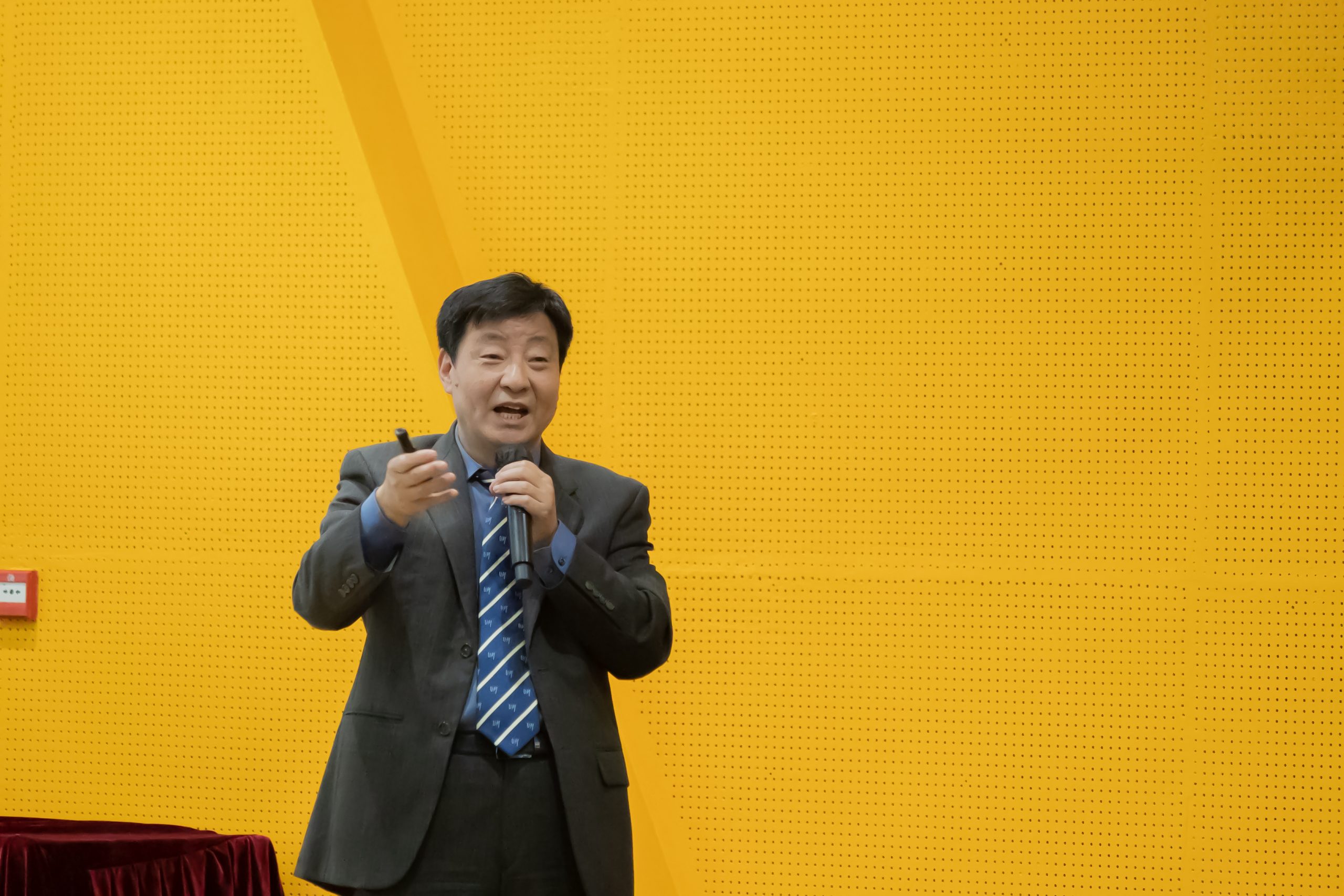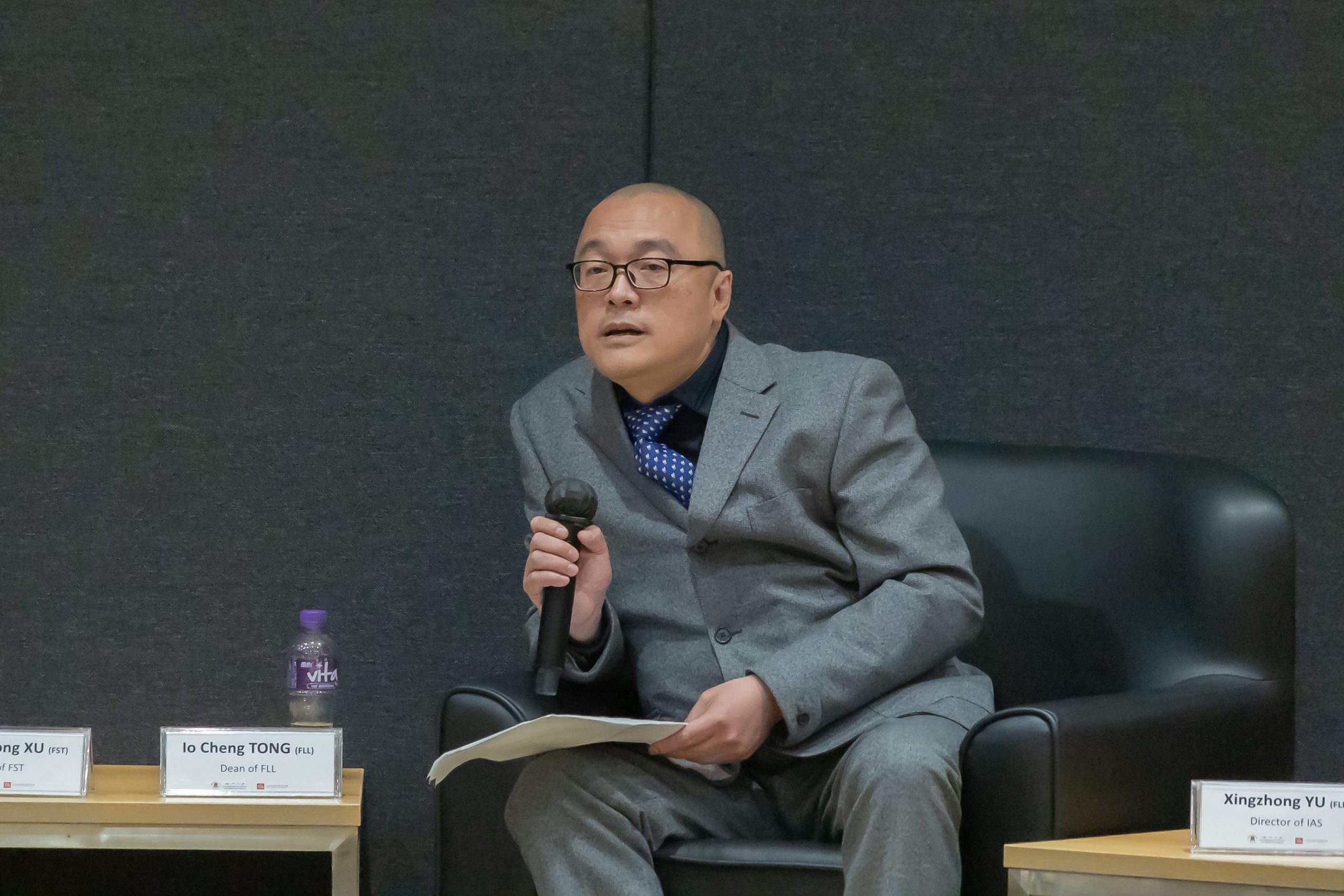
The IAS 2022-2023 Round Table Discussion, titled “Interpreting and Reflecting on ChatGPT”, was successfully held on 23 February at the Wu Yee Sun Library Auditorium of the University of Macau. The event brought together leading scholars from multiple disciplines, including Prof. Xu Chengzhong, Dean of the Faculty of Science and Technology; Prof. Tong Io Cheng, Dean of the Faculty of Law; and Prof. Zhao Xinshu, Chair Professor in the Department of Communication of the Faculty of Social Sciences. They examined the interdisciplinary issues raised by ChatGPT from different perspectives. The roundtable was chaired by Prof. Yu Xingzhong, Director of the Institute of Advanced Studies in Humanities and Social Sciences.
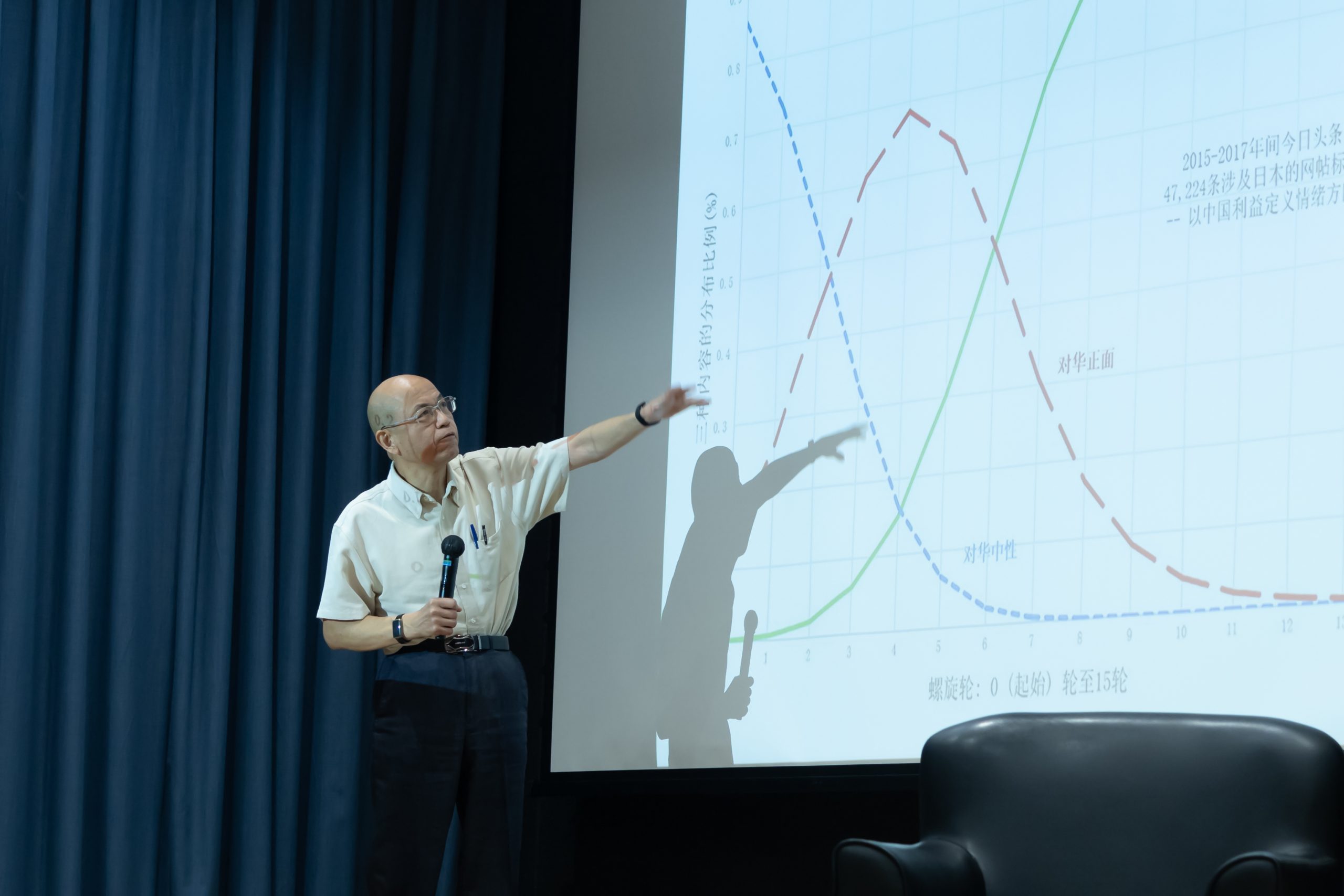
Prof. Zhao began by sharing his views on the emergence of ChatGPT. In his perspective, ChatGPT is the result of a qualitative leap built upon the quantitative accumulation of ChatBot technologies, and its rise brings both immediate and future challenges to teaching and learning. Prof. Zhao also presented his latest research finding that group communication circles tend to be assimilated into negativity after going through fifteen information loops. He pointed out that the emergence of technologies like ChatGPT may alter this process and lead to different social outcomes.
Prof. Xu reviewed the history of AI from a technical perspective. He explained the training principles behind ChatGPT and discussed the realistic prospects of China catching up in this area amid international competition. Prof. Xu noted that educators should reflect on the ethical boundaries of using ChatGPT and consider the division of labour between human productivity and AI-powered tools. He further pointed out that, owing to the popularisation by ChatGPT, professionals across various industries may face the risk of being replaced—an issue that warrants early and serious consideration.
Prof. Tong offered his perspective on ChatGPT from the field of law. He emphasised that ChatGPT is, at its core, a language model that disrupts the contemporary and unique conceptualisation of knowledge by human kind. At present, ChatGPT has already brought notable convenience to both academic research in law and legal practice. Prof. Tong suggested that, rather than reacting with anxiety, we should approach ChatGPT with composure, aiding the revolutionisation of our existing modes of social organisation, and make rational use of such technologies to benefit humanity.
最後,於興中教授對三位教授的演講進行了總結。於教授從現實科技主義出發,尋求在技術烏托邦主義和新盧德主義之間的中間地帶。他認爲我們應該看到ChatGPT所帶來的社會問題,即其已經具有駕馭語言這一人類生存形式的能力;但另一方面,作爲革命性的創新,ChatGPT具有社會推動意義。我們應該努力理解技術,以更符合人類基本價值觀的方式去應用技術。
Finally, Prof. Yu brought the discussion with the fellow scholars to a close with his concluding remarks. He approached the discussion from the standpoint of technorealism, seeking a middle ground between technological utopianism and neo-Luddism. Prof. Yu noted that we must recognise the social challenges posed by ChatGPT, particularly its emerging capacity to command language, one of the fundamental forms of human existence. At the same time, he emphasised that as a revolutionary innovation, ChatGPT carries significant potential to drive social progress. He argued that we should make every effort to understand technology and apply it in ways that align with core human values.
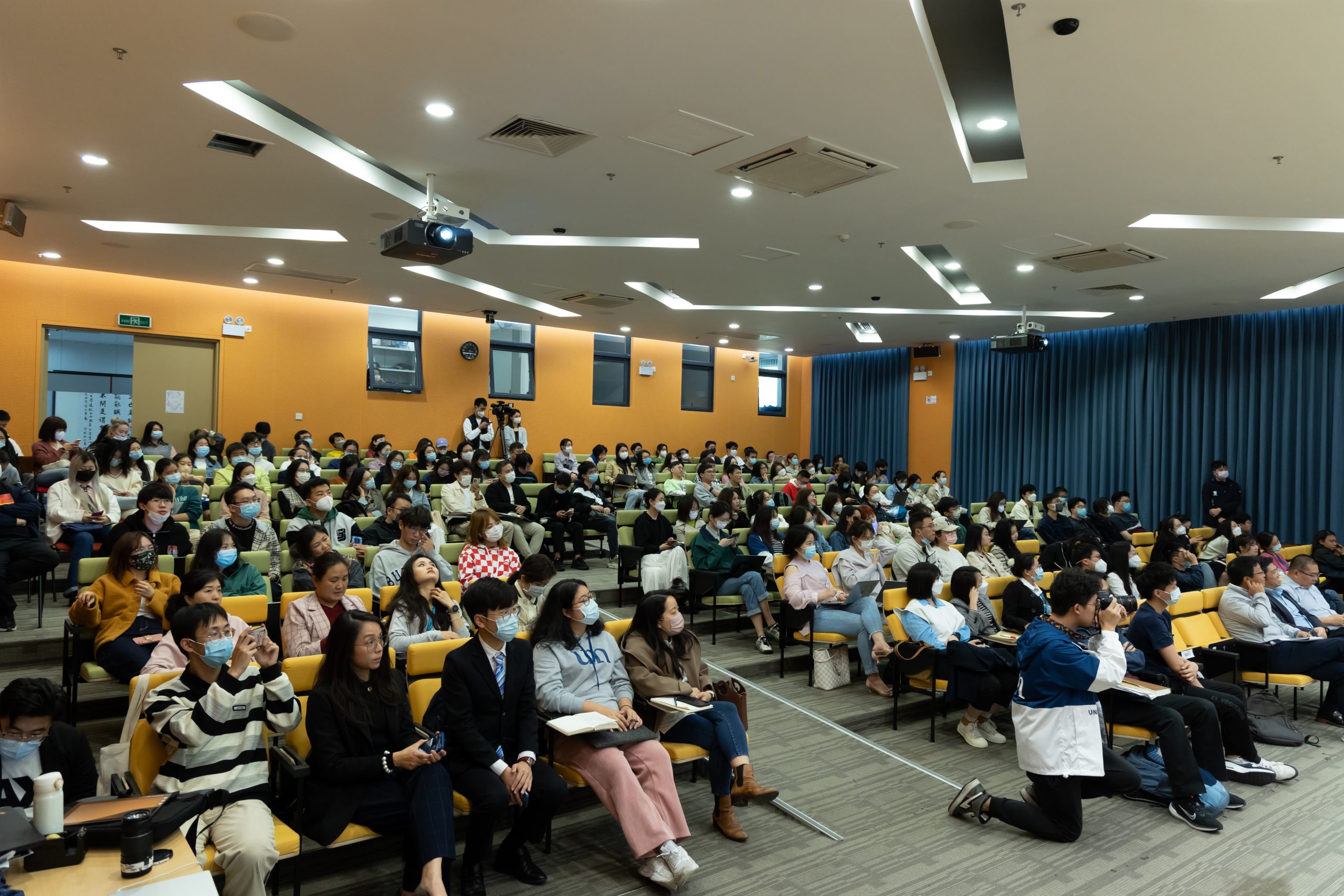
The roundtable was held in both online and offline modes, attracting more than 300 participants from both within and outside the University, and sparked lively discussions on the topic of ChatGPT.
The following are media interviews and coverage related to this event: click here.