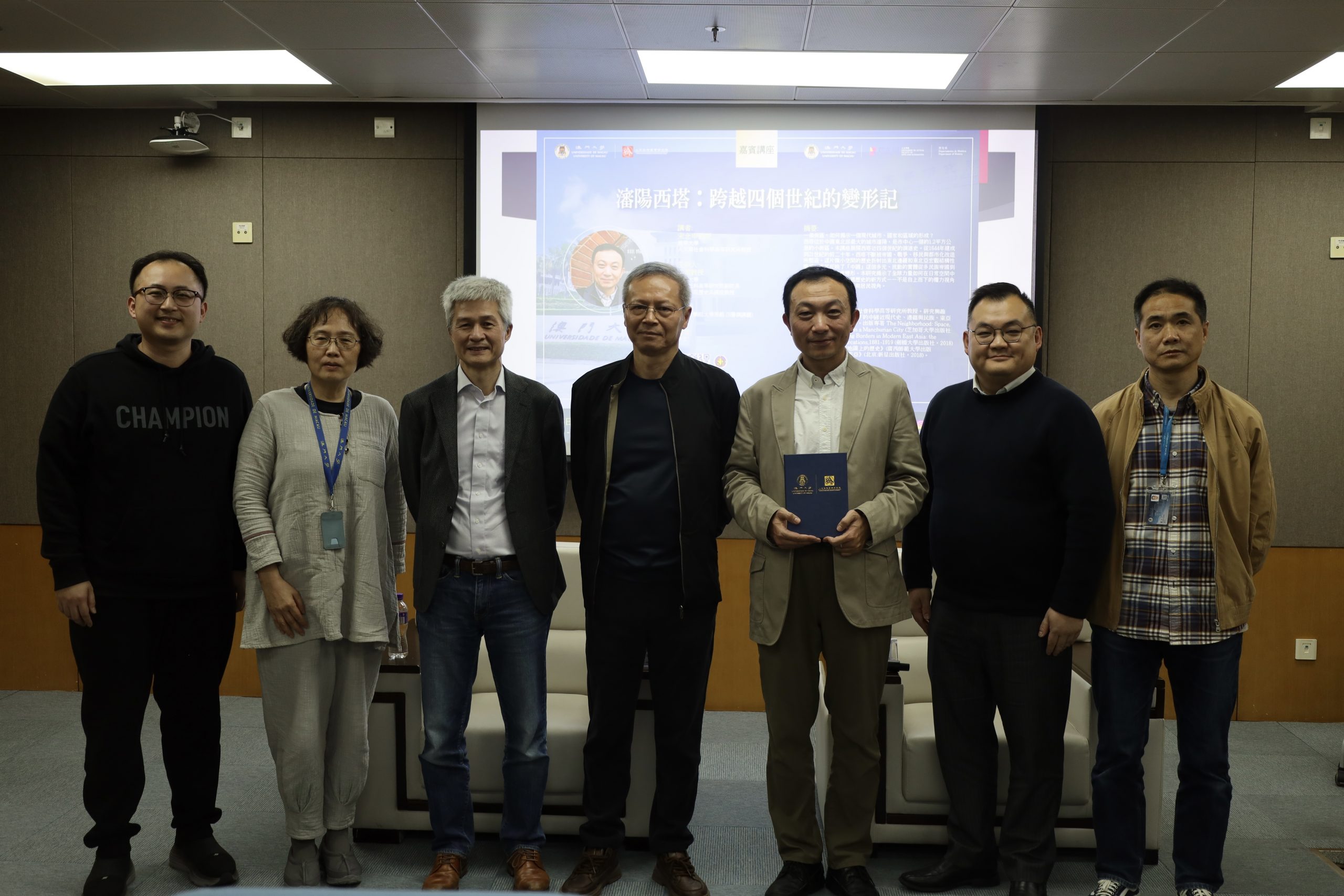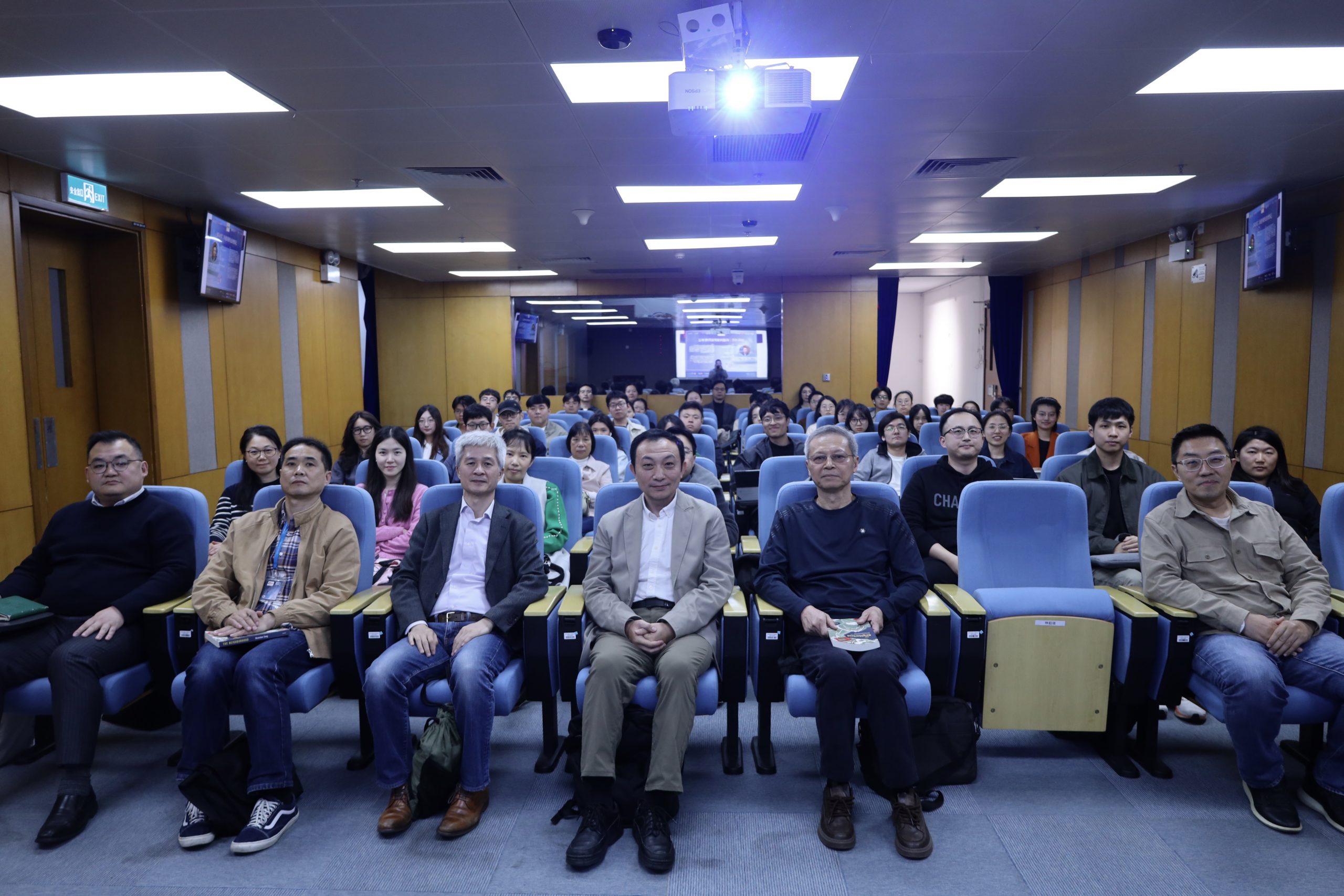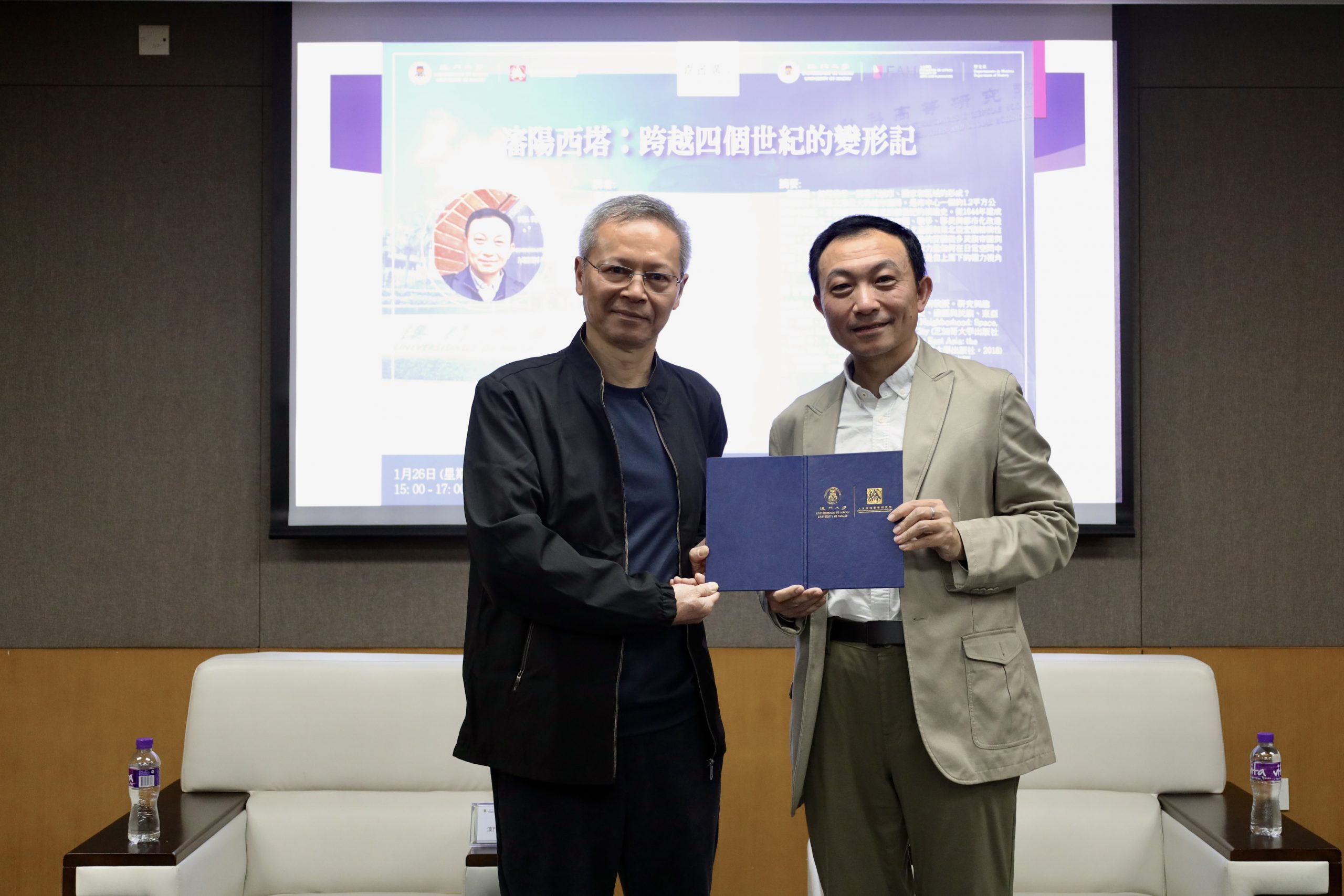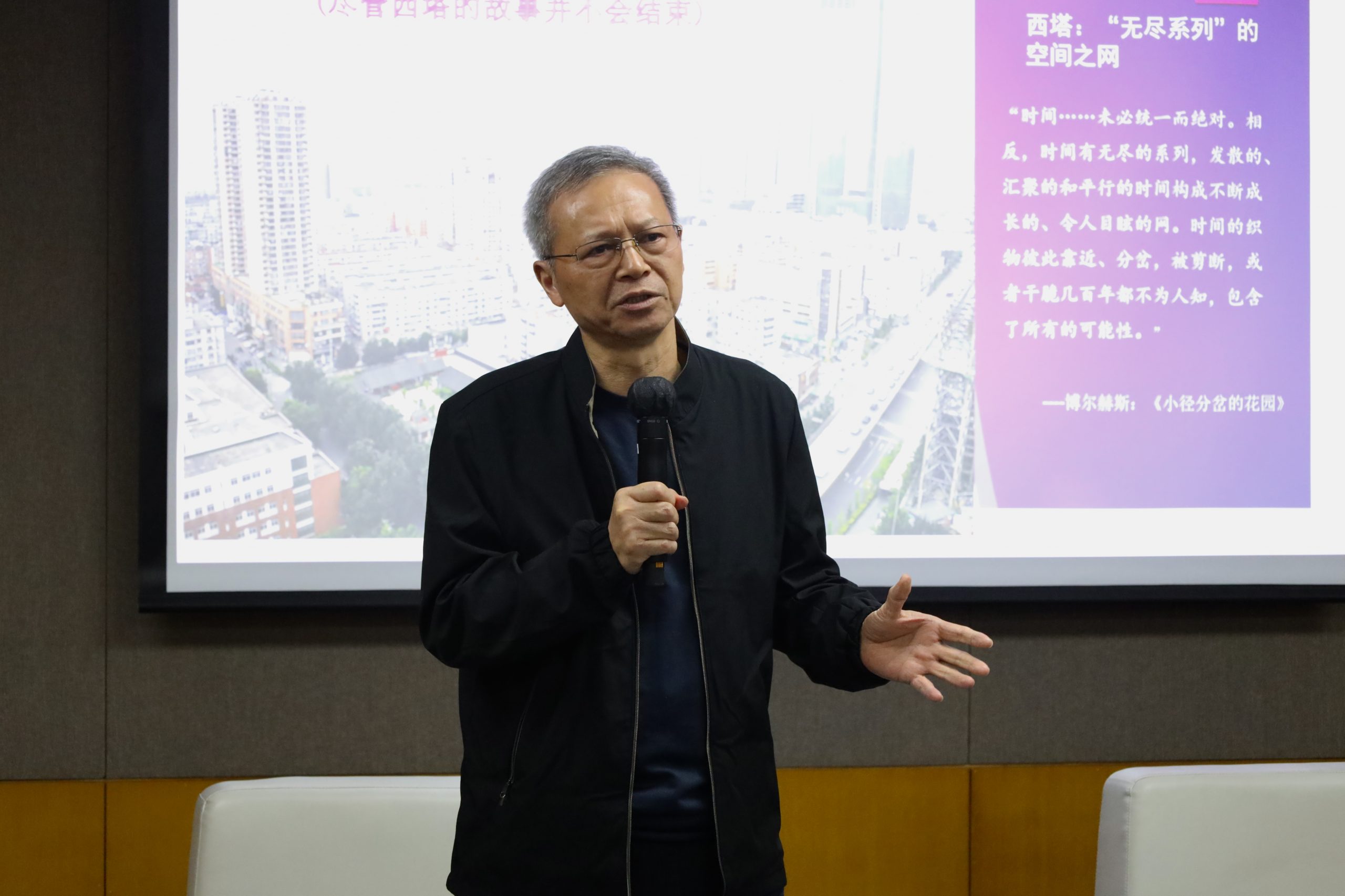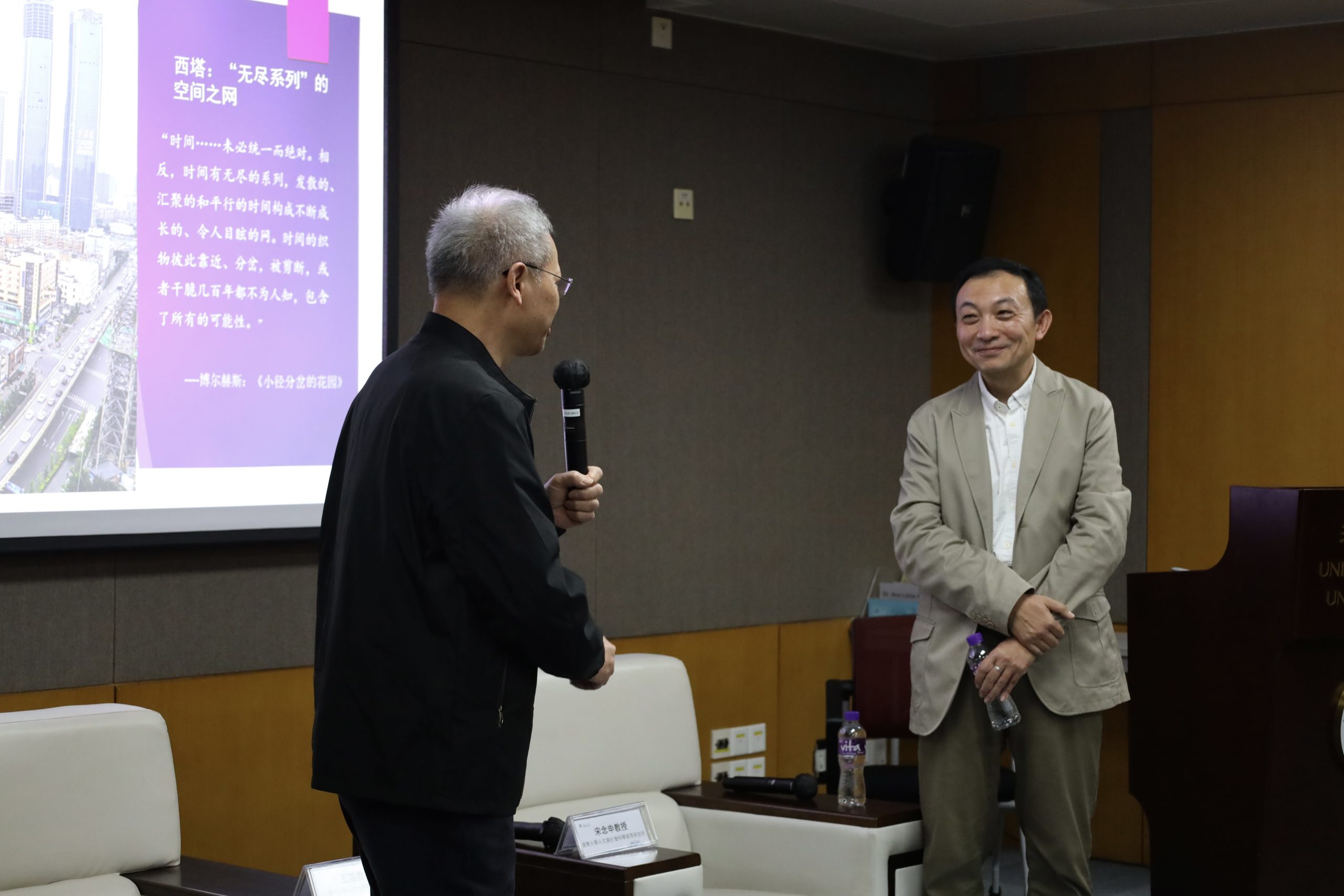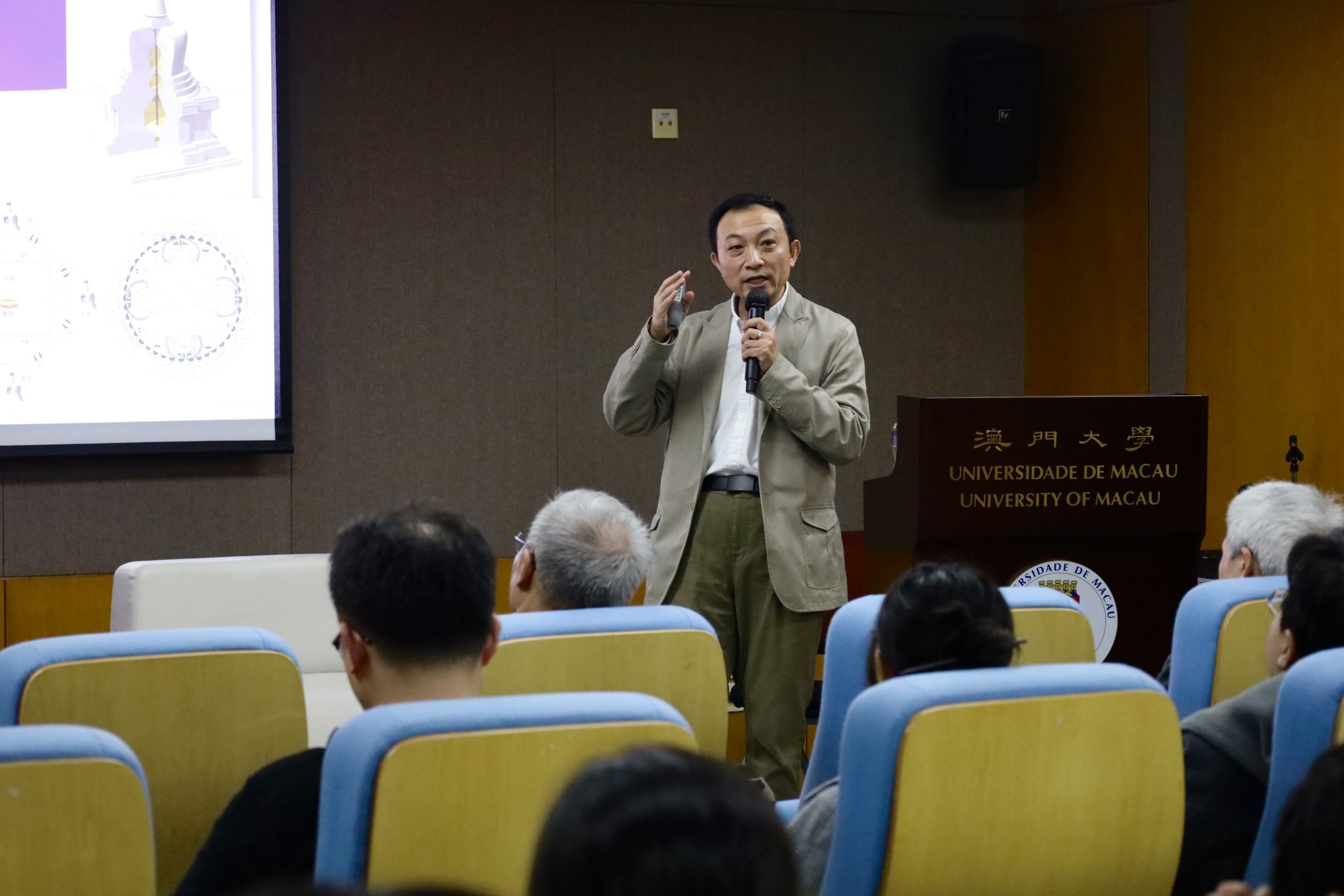
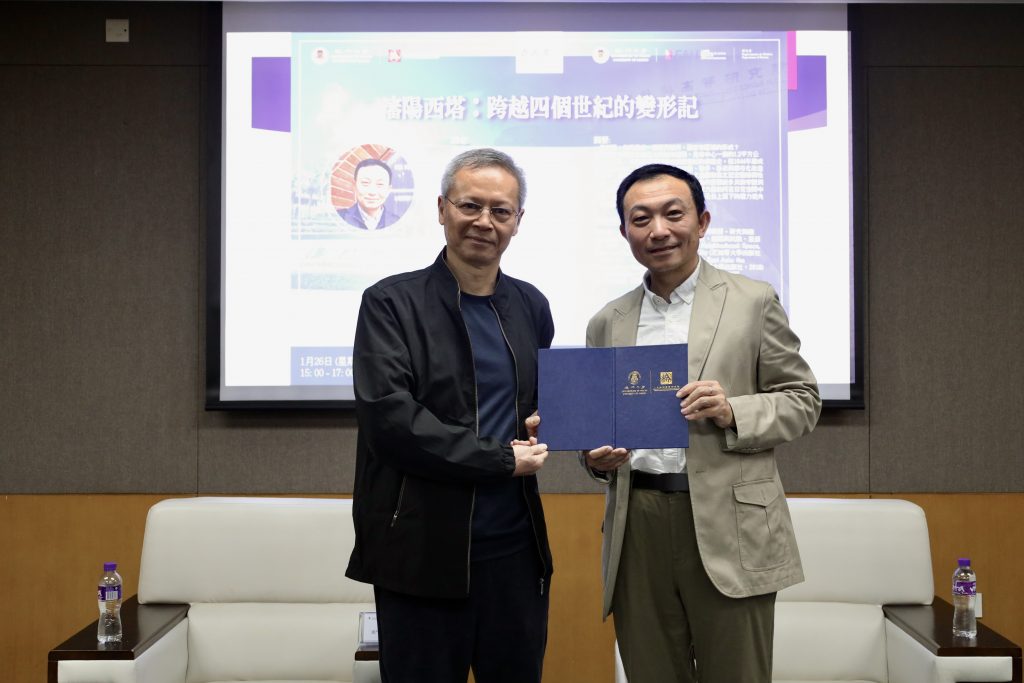
On the afternoon of 26 January, the Institute of Advanced Studies in Humanities and Social Sciences (IAS) at the University of Macau (UM) held a Distinguished Guest Lecture, featuring Professor Nianshen Song of the Institute for Advanced Studies in Humanities and Social Sciences, Tsinghua University. Entitled “The Metamorphosis of Shenyang’s Xita: A Journey Through Four Centuries”, the lecture guided the audience through a seemingly small yet highly condensed urban space, offering fresh perspectives on the formation of modern China, the state, and the city. The lecture was moderated by Professor Di Wang, Chair Professor of the Department of History of the Faculty of Arts and Humanities and Associate Director of IAS, University of Macau.
Shenyang’s Xita, a neighbourhood of only about 1.2 square kilometres, as a micro-historical lens, Professor Song illustrated how this compact urban quarter refracts macro-structural transformations in the modern history of Northeast China and even Asia. Xita was first established during the Qing dynasty. Originating from the system of four pagodas and their accompanying temples constructed in Shengjing (present-day Shenyang, historically also known as Mukden) under the order of Hong Taiji, it became an important centre of Tibetan Buddhism in Northeast China. The site exemplifies the Qing dynasty’s use of religious networks to consolidate its rule over Inner Asian regions such as Mongolia and Tibet through a patron–field-of-merit relationship. These temples were not merely a sacred site; it was also embedded in the Qing’s bureaucratic order. Lamas functioned as “official monks,” whose hierarchy, sources of livelihood, and legal standing reflected the close entanglement of state power and religious institutions. With the fall of the Qing, this system gradually disintegrated, and Xita correspondingly shifted from a religious hub to a secular space bearing multiple layers of meaning.
Since the mid-20th century, Xita has gradually developed into a major settlement for Korean-Chinese immigrants. The community’s life history has been vividly preserved through the oral accounts of ordinary residents such as Che In-seok—from fleeing war and settling their families, to the hardships of the ten-year upheaval, and later making a living by selling kimchi after the reform and opening-up policy.
Furthermore, the journey of Xita Church—from its establishment and confiscation to its eventual return—reflects the interaction between transnational faith and national policies. The Xita Pagoda was demolished in 1968; in the 1990s, with the injection of South Korean capital, the community transformed into a bustling “Little Seoul,” evolving into a symbol of ethnic solidarity and commercial development. The poetry collection Xita by poet Kim Chang-yong aptly metaphorizes the historical changes and meaning shifts of Xita, from a religious sanctuary to a dynamic neighborhood.
Professor argued that the history of Xita is non-linear, shaped by overlapping influences from war, migration, and daily life. He emphasized the importance of understanding history through the experiences of diverse actors—such as lamas, merchants, and laborers—rather than grand narratives from the state perspective. This understanding highlights that modern China evolved through local practices and relationships, transcending geographical boundaries. Xita represents a “network of space,” inviting a micro-historical perspective to explore overlooked contexts and voices within broader history.
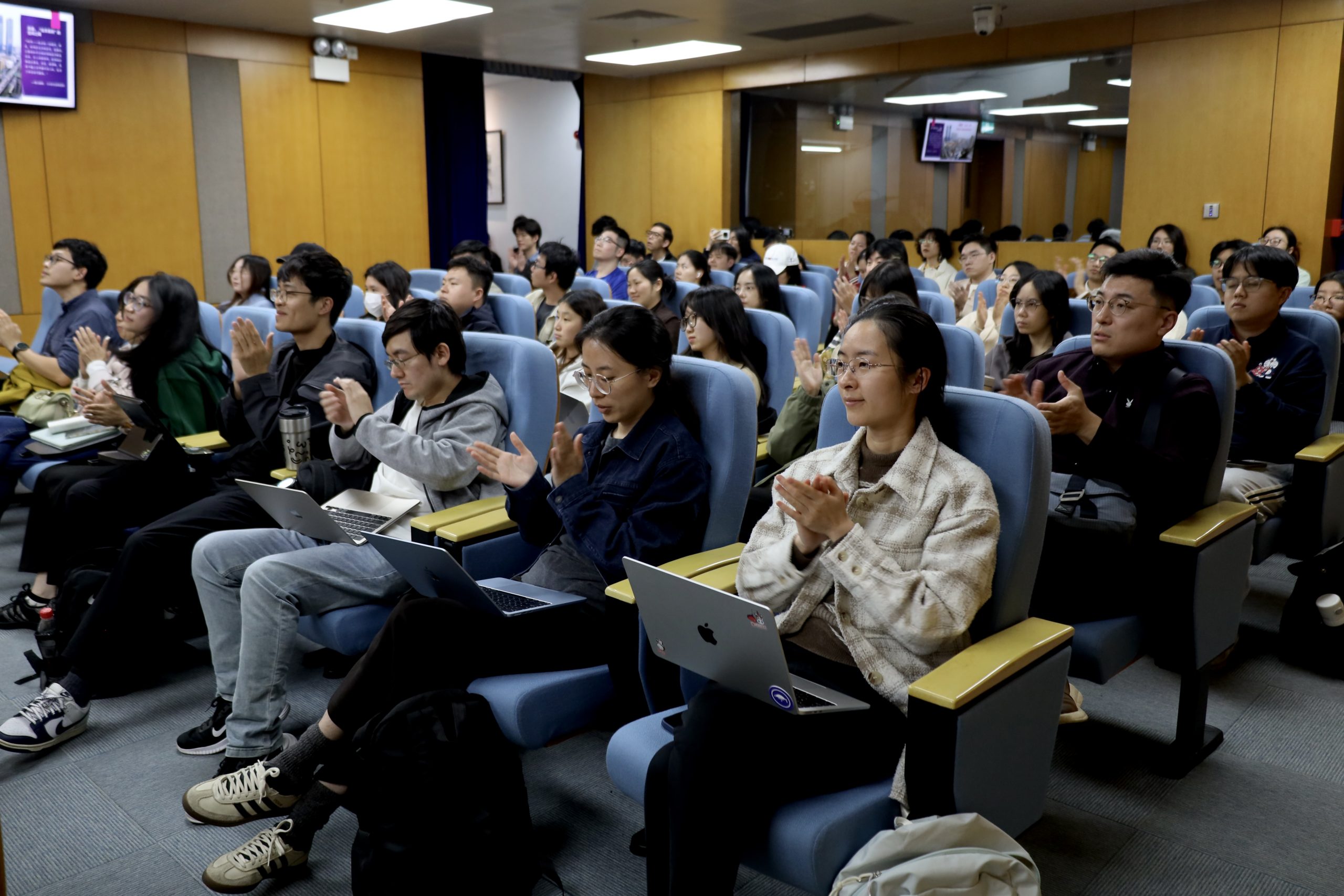
The lecture drew nearly 100 enthusiastic faculty and students from various departments and units, including Arts and Design, Chinese Language and Literature, History, Japanese Studies, and more. Organized by the Institute of Advanced Studies in Humanities and Social Sciences (IAS) at the University of Macau, the event aimed to promote academic dialogue and exchange. It highlighted vibrant historical research and provided valuable insights into reconciling global history with Chinese history.