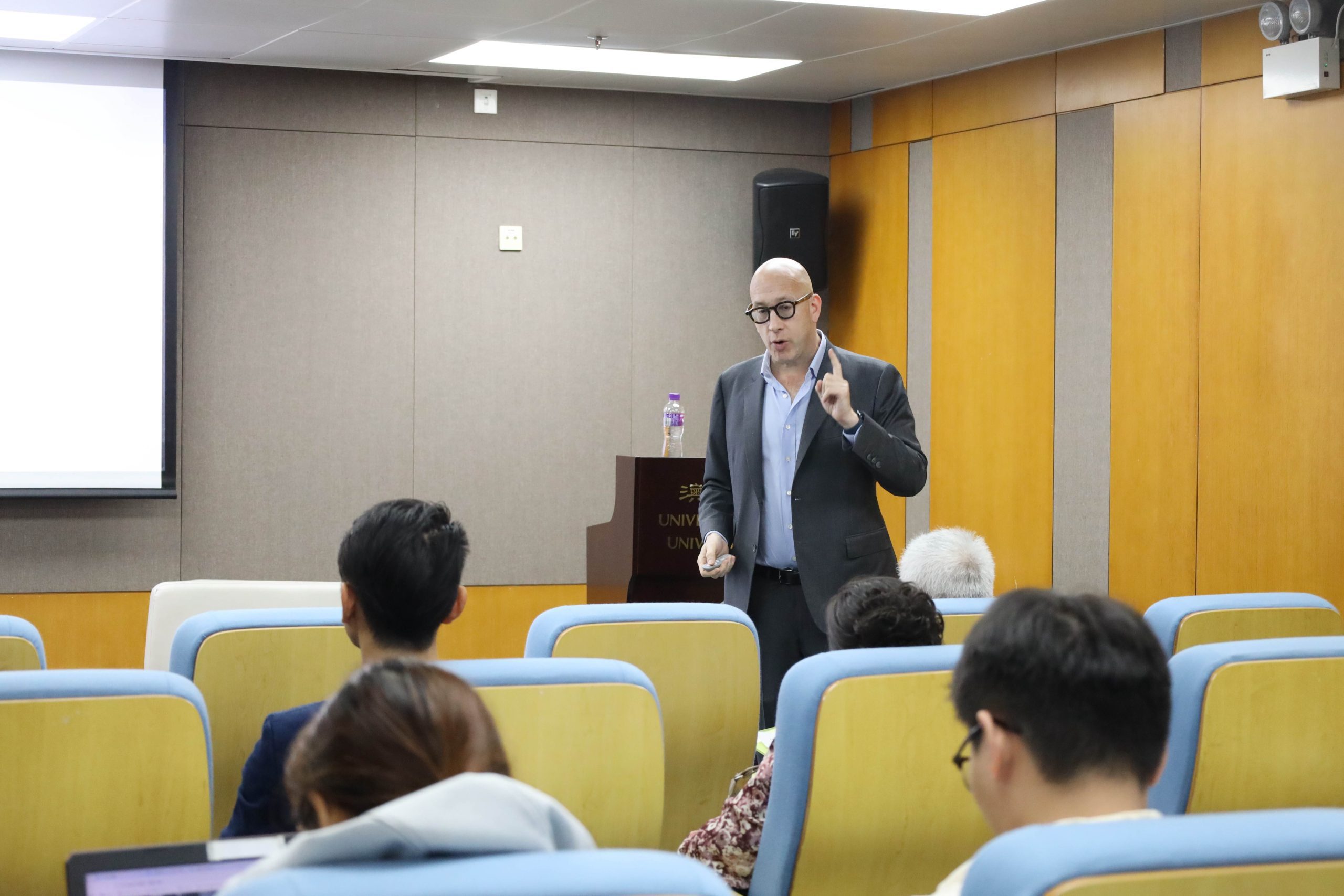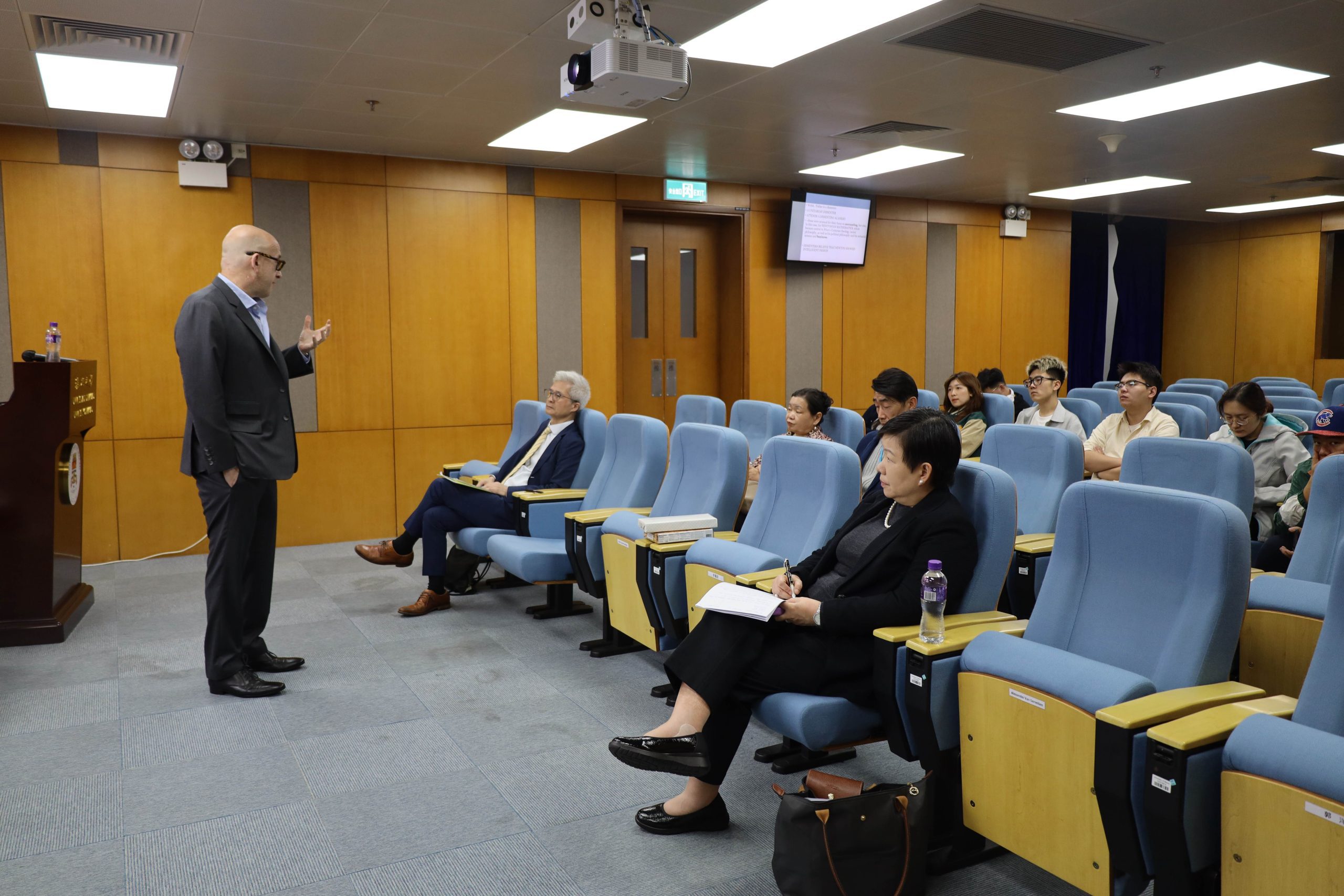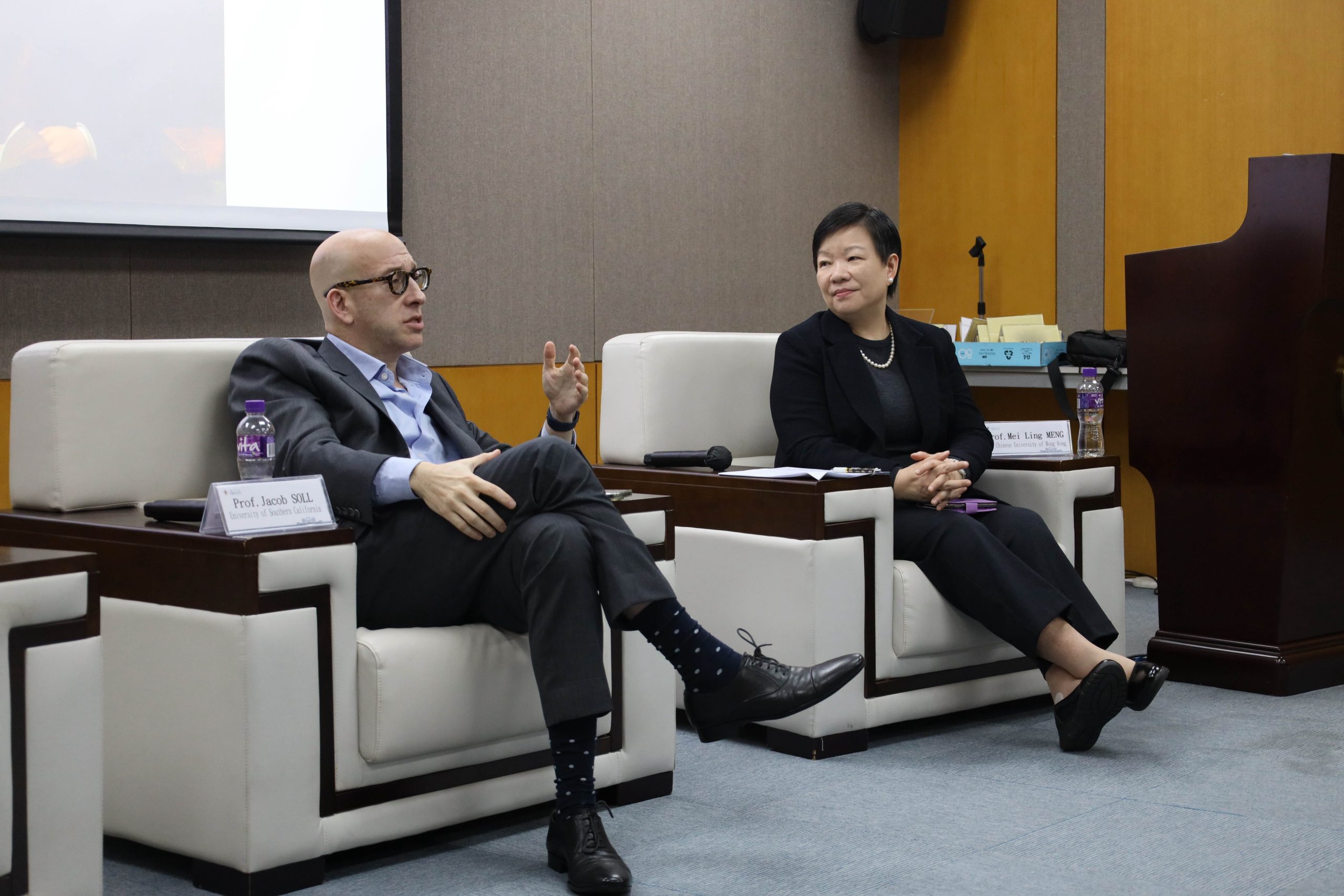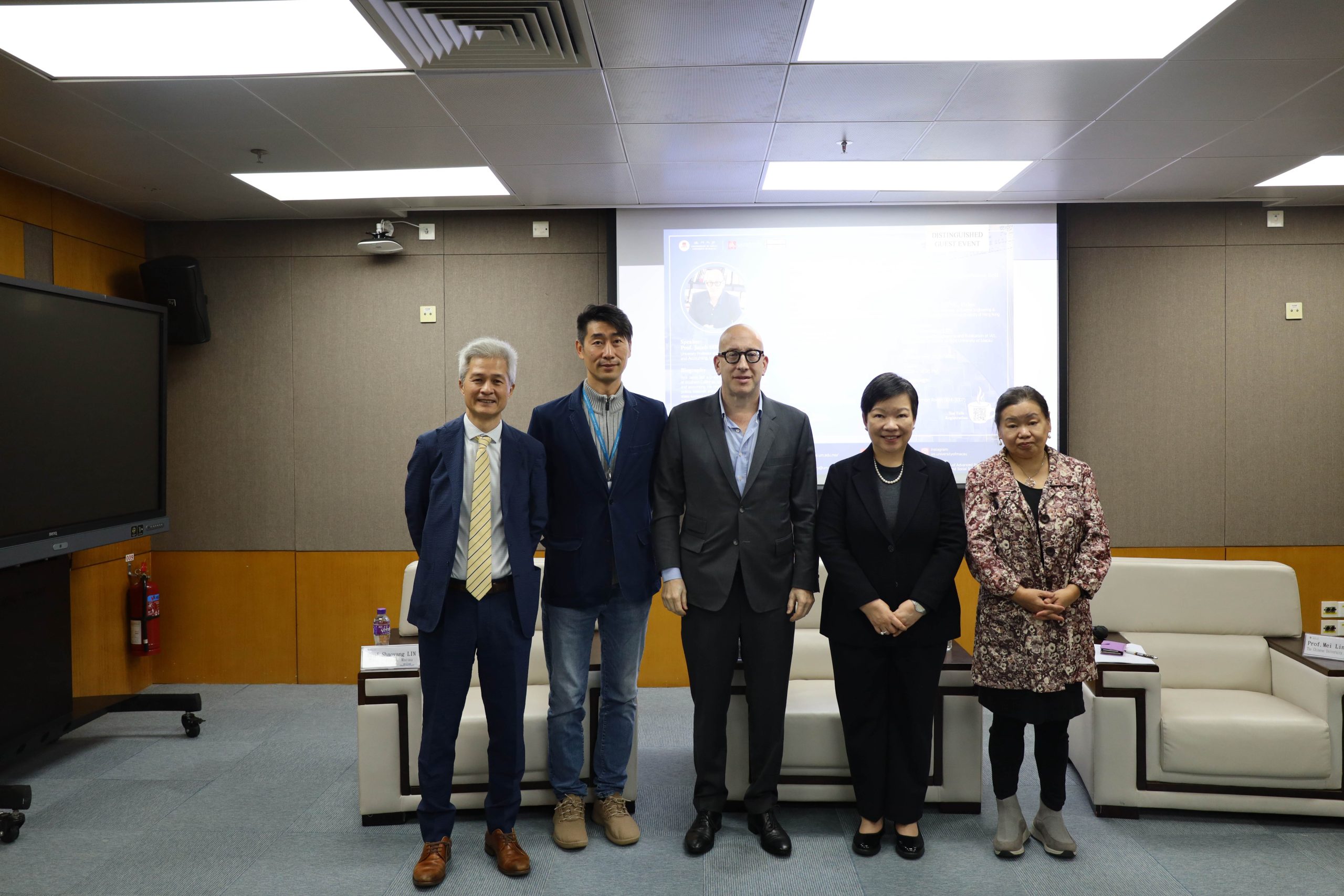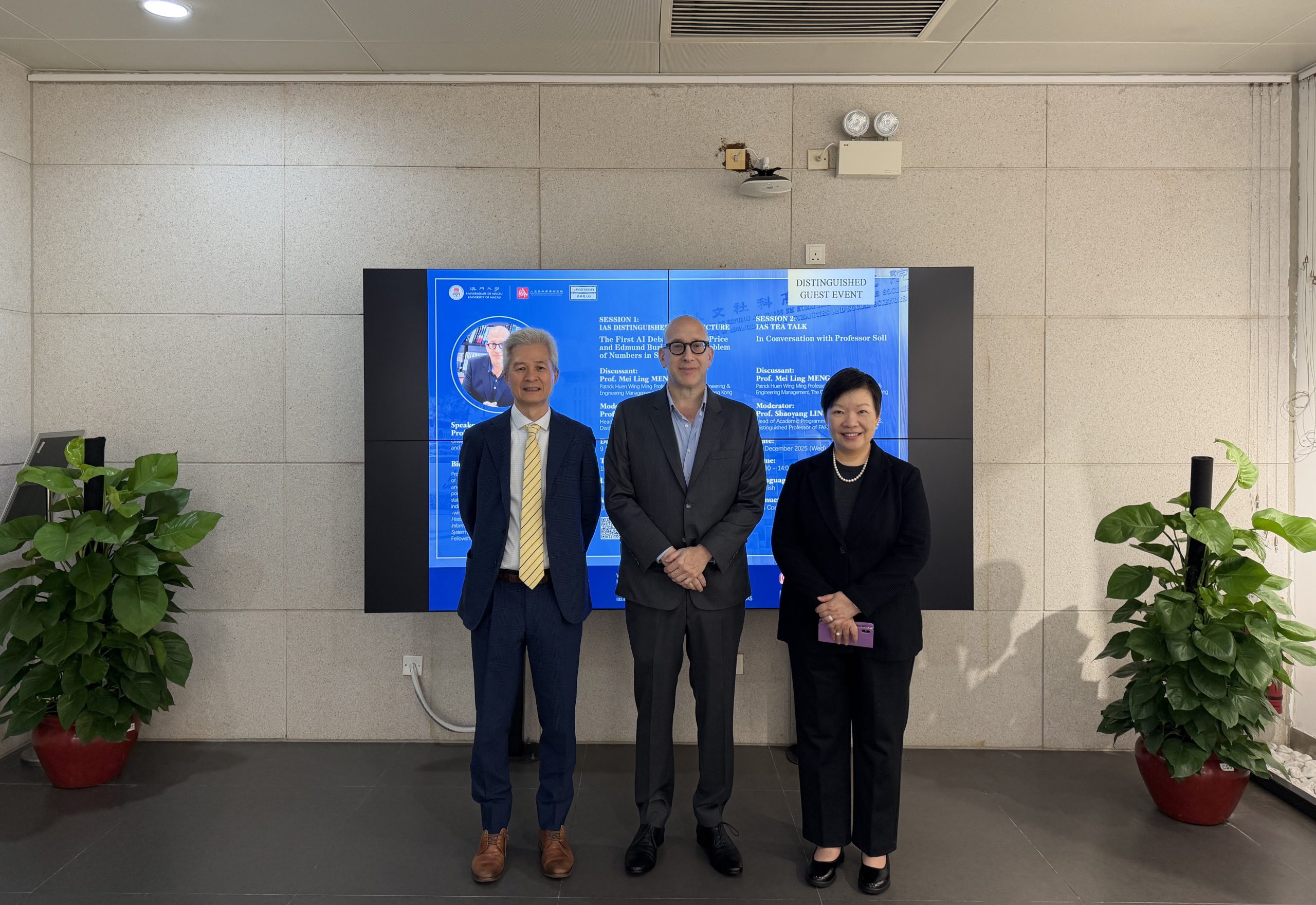

On December 9, the Institute of Advanced Studies in Humanities and Social Sciences (IAS) at University of Macau successfully hosted the Distinguished Guest Lecture entitled “The First AI Debate: Richard Price and Edmund Burke and the Problem of Numbers in Society”. The lecture was delivered by Professor Jacob SOLL, who is a university professor and professor of Philosophy, History and Accounting at University of Southern California. Professor Shaoyang LIN, head of academic programme and publication of IAS, served as moderator. This event aimed to rediscover the ideological legacy of Richard Price, a neglected 18th-century thinker, and explore its profound connections with modern AI, finance, and political thought.
Professor Soll elaborated on core contributions of Richard Price. Price discovered and published Thomas Bayes’ unpublished theorem. Through reconstructing and integrating the concept of “prudence” with Bayesian logic which advocates for making a decision based on data rather than relying solely on moral virtue or tradition in an uncertain world, Price extended its application. Professor Soll highlighted Price’s practical achievements, such as co-founding the first modern insurance company using actuarial mathematics and influencing the U.S. Declaration of Independence with his radical egalitarian ideas. Additionally, Professor Soll drew parallels between Price’s 18th-century debates with Edmund Burke over computational rationality versus traditional humanism, as well as contemporary dilemmas posed by artificial intelligence (AI).
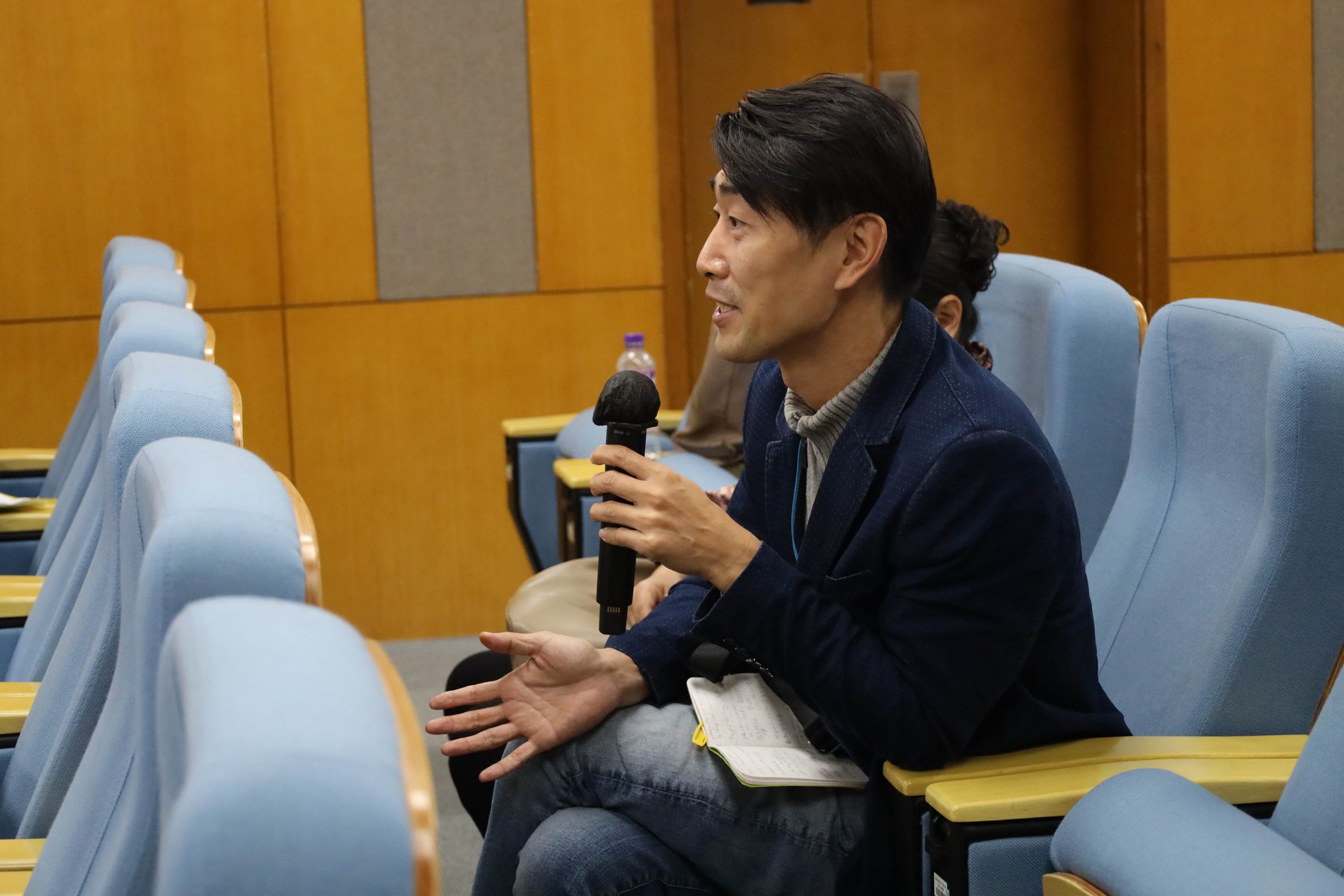
During the Q&A session, Professor Mei Ling MENG, Helen, Patrick Huen Wing Ming Professor of Systems Engineering and Engineering Management at The Chinese University of Hong Kong, served as discussant. Professor Meng and participants engaged in in-depth discussions with Professor Soll. Questions covered diverse areas, including how economists skeptical of rational calculation view Price’s mathematical models, whether accounting professionals will be replaced by AI, the trade-off between the efficiency offered by AI and cognitive decline shown in young people, the reflection of Price’s and Burke’s ideas in contemporary Chinese governance, and the need for legal regulation of tech giants dominance in digital prudence. These dialogues underscored the timeless relevance of Price’s thoughts to modern societal and academic challenges.
The lecture attracted a diverse audience of scholars and students from different faculties, including Professor Ellen ZHANG from the Department of Philosophy and Religious Studies and Professor Xun CHI from the Department of Arts and Design in the Faculty of Arts and Humanities at University of Macau. By reviving the forgotten legacy of Richard Price and Edmund Burke, the lecture bridged historical intellectual debates with modern technological and social issues, offering new interdisciplinary perspectives for understanding decision-making, freedom, and progress in an increasingly data-driven world.